Why Are Skin Problems Increasing Nowadays? Real Causes, Ayurvedic Insights & Natural Ways to Support Healthy Skin
Have you ever wondered why skin problems have become so common today? A few decades ago, issues like frequent pimples, pigmentation, dull skin, acne scars, and recurring skin infections were mostly associated with teenagers. Today, these concerns are affecting people of almost every age group—from school-going children and college students to working professionals and older adults.
The reason is simple: our lifestyle has changed dramatically.
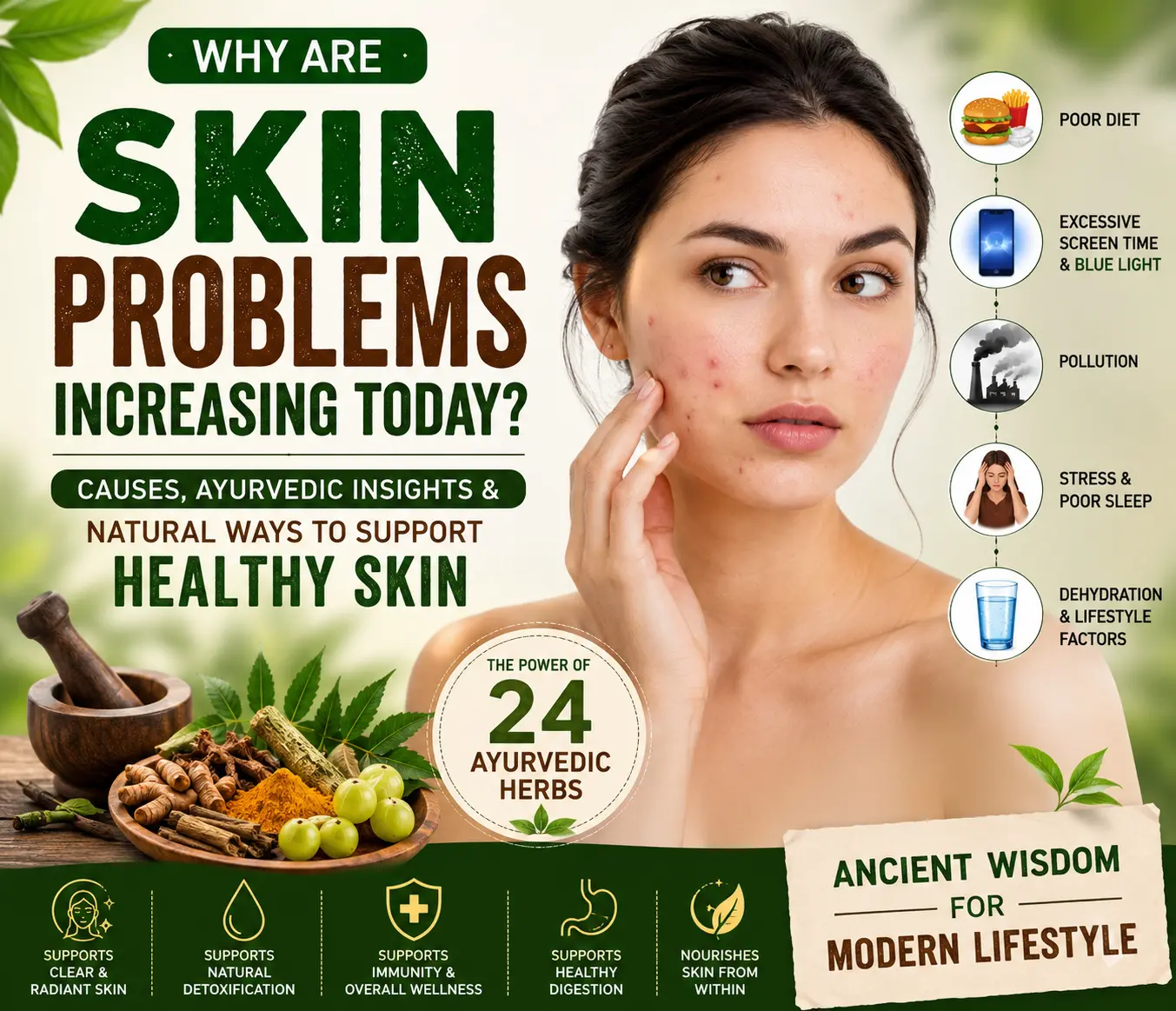
Today's fast-paced life has brought convenience, but it has also introduced unhealthy eating habits, increasing pollution, long working hours, chronic stress, irregular sleep, and excessive screen time. While these factors may seem unrelated to the skin, they gradually influence the body's internal balance, which is often reflected on the skin.
Our skin is the largest organ of the body. It not only protects us from the external environment but also reflects our overall health. Healthy, glowing skin is rarely achieved by external skincare products alone. It is often supported by proper nutrition, healthy digestion, balanced lifestyle habits, and good internal wellness.
In Ayurveda, skin health is viewed as an outcome of the body's internal harmony rather than just external appearance. This holistic approach has been followed for centuries and continues to remain relevant in today's lifestyle-driven world.
Let's understand why skin problems are increasing, what role our daily habits play, and how natural wellness practices may support healthy skin.
Skin Problems Are No Longer Just a Cosmetic Concern
For many people, skin issues begin with a small pimple or occasional dullness. Over time, they may notice recurring breakouts, stubborn pigmentation, uneven skin tone, excessive oiliness, dryness, or marks that take months to fade.
Common skin concerns today include:
-
Pimples and acne
-
Acne marks and dark spots
-
Pigmentation
-
Uneven skin tone
-
Dull-looking skin
-
Excessive oiliness
-
Dry skin
-
Recurring skin discomfort
-
Loss of natural glow
While cosmetic products may temporarily improve the appearance of the skin, they may not always address the underlying lifestyle factors contributing to these concerns.
Why Are Skin Problems Increasing So Rapidly Today?
1. Wrong Eating Habits
Modern diets are often rich in refined carbohydrates, excess sugar, unhealthy fats, and ultra-processed foods but low in fibre, vitamins, minerals, and antioxidants. Such dietary patterns may influence digestion, metabolic health, and inflammatory processes within the body. Since the skin depends on proper nutrition for repair and renewal, a nutrient-poor diet may eventually be reflected through dullness, uneven texture, and reduced skin vitality.
One of the biggest contributors to poor skin health is an unhealthy diet.
Modern meals are often loaded with:
-
Processed foods
-
Deep-fried snacks
-
Refined flour
-
Excess sugar
-
Artificial flavours
-
Preservatives
-
Carbonated drinks
These foods may provide temporary satisfaction but often lack essential nutrients required for healthy skin. A nutrient-poor diet may affect digestion, metabolism, and overall wellness, which can eventually reflect on the skin.
2. Junk Food and Fast Food Culture
Pizza, burgers, fries, instant noodles, packaged snacks, and sugary beverages have become a routine part of modern life.
Although enjoying these foods occasionally is perfectly fine, regular consumption may reduce the intake of fresh fruits, vegetables, whole grains, and antioxidant-rich foods that help maintain healthy skin.
A balanced diet remains one of the strongest foundations of overall skin wellness.
3. Increasing Pollution
Air pollution is no longer limited to metropolitan cities.
Dust particles, smoke, vehicle emissions, and environmental pollutants constantly interact with our skin. Over time, they may contribute to oxidative stress on the skin's surface, making it appear tired, dull, and less radiant.
Regular cleansing, hydration, and maintaining internal wellness can help support the skin against everyday environmental exposure.
Fine dust particles (PM2.5), vehicle emissions, smoke, and industrial pollutants continuously settle on the skin throughout the day. These pollutants may weaken the skin's protective barrier and increase oxidative stress, making the skin appear dull, dehydrated, and tired. When pollution combines with UV exposure and poor cleansing habits, it may also contribute to clogged pores and uneven-looking skin over time.
4. Excessive Screen Time
How Excessive Screen Time Affects Your Skin
Smartphones, laptops, tablets, and televisions have become an inseparable part of modern life. While these devices make our lives easier, spending long hours in front of screens may indirectly affect skin health in several ways.
Digital devices emit high-energy visible (HEV) blue light. Although research is still evolving, prolonged exposure to blue light—especially when combined with environmental stressors—has been studied for its potential role in increasing oxidative stress in skin cells. This oxidative stress may contribute to premature skin ageing and make pigmentation concerns more noticeable in some individuals.
More importantly, excessive screen time often affects the skin indirectly by:
- Reducing physical activity
- Increasing mental stress
- Disrupting the body's natural sleep cycle
- Encouraging unhealthy snacking and poor hydration
- Reducing outdoor activity and overall wellness
Together, these lifestyle changes can gradually affect the skin's natural glow and overall appearance. Taking regular screen breaks, staying hydrated, sleeping well, and following a healthy lifestyle can help support healthier skin.
5. Stress Has Become a Daily Companion
Deadlines, work pressure, financial responsibilities, and social media have made stress almost unavoidable.
When stress becomes chronic, it may affect sleep quality, eating habits, digestion, and overall well-being. Since the skin often reflects internal health, prolonged stress can sometimes make existing skin concerns appear more noticeable.
Managing stress through meditation, yoga, exercise, hobbies, or adequate rest is beneficial not only for mental wellness but also for maintaining healthy-looking skin.
6. Poor Sleep
Your skin performs many natural repair processes while you sleep.
Consistently sleeping for fewer hours than needed may leave the skin looking tired, dehydrated, and less refreshed.
Developing a regular sleep routine is one of the simplest yet most effective lifestyle habits for supporting healthy skin.
Your Skin Reflects What Happens Inside Your Body
Many people focus only on creams, face washes, and serums. While these products play an important role in skincare, they represent only one aspect of overall skin health.
Healthy skin is influenced by several internal factors, including:
-
Balanced nutrition
-
Proper hydration
-
Healthy digestion
-
Adequate sleep
-
Regular physical activity
-
Stress management
-
Overall metabolic wellness
When these factors are neglected, the skin may gradually lose its natural glow.
The Connection Between Gut Health and Skin
Modern research increasingly highlights the relationship between gut health and skin wellness, often referred to as the gut-skin axis.
A healthy digestive system helps the body absorb essential nutrients such as vitamins, minerals, proteins, and antioxidants that contribute to overall wellness.
If digestion is frequently disturbed, nutritional balance may also be affected. Supporting digestive health through fibre-rich foods, adequate hydration, and balanced eating habits can therefore play an important role in maintaining healthy skin.
What Does Ayurveda Say About Skin Health?
Ayurveda has always viewed healthy skin as a reflection of internal balance.
Instead of focusing only on external beauty, Ayurveda emphasizes supporting the body's natural systems through wholesome nutrition, healthy digestion, proper lifestyle, and carefully selected herbs.
Traditional Ayurvedic texts associate healthy skin with balanced digestion, proper nourishment, and overall body wellness. This holistic philosophy continues to inspire many natural approaches to skincare even today.
Why Internal Nourishment Matters More Than External Beauty
Imagine watering only the leaves of a tree while ignoring its roots.
The leaves may appear fresh for a short period, but true growth depends on healthy roots.
Similarly, skincare products work primarily on the outer layer of the skin. Supporting internal wellness through nutrition, hydration, healthy lifestyle habits, and natural herbs complements external skincare and contributes to overall skin health.
Nature Has Always Offered Remarkable Herbs for Skin Wellness
For centuries, Ayurveda has used a variety of herbs traditionally valued for supporting healthy skin.
Some of the most respected herbs include:
Gandhak Rasayan
Gandhak Rasayan is one of the most valued classical Ayurvedic ingredients traditionally used in formulations intended to support skin wellness. After undergoing a detailed purification process (Shodhana), it is believed to help maintain healthy skin and support the body's natural cleansing processes. Because of its long-standing reputation in Ayurveda, Gandhak Rasayan continues to be included in many premium skin-support formulations.
Shuddh Gairik
Shuddh Gairik is a purified mineral ingredient described in classical Ayurvedic texts. Traditionally recognised for its cooling nature, it has been used in formulations designed to help maintain the natural balance of the body. Its inclusion reflects Ayurveda's philosophy of supporting internal harmony, which is considered important for healthy-looking skin.
Neem Extract
Neem has been known as one of Ayurveda's most trusted herbs for skin care for generations. Rich in naturally occurring plant compounds, Neem has traditionally been used to support clear, healthy-looking skin and maintain skin hygiene. It remains one of the most widely respected herbs in Ayurvedic skin wellness formulations.
Giloy Satva
Giloy Satva is the concentrated essence of Guduchi, one of Ayurveda's most celebrated Rasayana herbs. Traditionally valued for supporting immunity and overall well-being, Giloy also complements Ayurvedic formulations aimed at promoting healthy skin by helping maintain the body's natural balance.
Pipal
Pipal (Ficus religiosa) holds an important place in traditional Ayurveda. Different parts of this sacred tree have been used in classical formulations for centuries. It is traditionally included in herbal combinations that support overall wellness and contribute to maintaining healthy skin.
Somraji (Bakuchi)
Somraji, also known as Bakuchi, is one of the most recognised Ayurvedic herbs associated with skin wellness. Classical Ayurvedic literature has long described its use in formulations intended to support healthy skin appearance and maintain an even-looking complexion. Because of this rich heritage, Somraji remains an important ingredient in many premium Ayurvedic skin formulations.
Nagarmotha
Ayurveda believes that healthy skin begins with a healthy digestive system. Nagarmotha has traditionally been valued for supporting digestive balance and metabolic wellness. Proper digestion helps the body utilise nutrients more efficiently, which in turn supports healthy skin from within.
Devdaru
Devdaru has been respected in Ayurveda for centuries for its cleansing and balancing properties. It is traditionally used in herbal formulations designed to support overall wellness and maintain healthy skin as part of a holistic Ayurvedic approach.
Harad
Harad is considered one of Ayurveda's most important rejuvenating herbs and is a key ingredient of the classical formulation Triphala. Traditionally associated with digestive health and natural detoxification, Harad plays an important role in supporting internal wellness—an essential foundation for naturally healthy skin.
Haldi (Turmeric)
Haldi has earned worldwide recognition not only as a culinary spice but also as one of Ayurveda's most valued herbs. Naturally rich in curcuminoids and antioxidants, Turmeric has traditionally been used to support healthy skin, promote a natural glow, and help protect the body against oxidative stress caused by modern lifestyles.
Kooth
Kooth (Saussurea lappa) is a premium Himalayan herb with a long history in Ayurveda. It has traditionally been included in herbal formulations that support body balance and skin wellness. Its naturally occurring bioactive compounds make it a valuable ingredient in holistic Ayurvedic formulations.
Vacha
Vacha is another classical Ayurvedic herb known for supporting overall metabolic balance and wellness. It has traditionally been combined with other herbs in carefully prepared formulations that aim to promote harmony within the body, an approach that Ayurveda considers essential for maintaining naturally healthy skin.
Why the Quality of Herbs Matters
Not all herbal ingredients are the same.
The effectiveness of any herbal formulation depends on several factors, including:
-
Quality of cultivation
-
Harvesting at the right stage
-
Proper drying methods
-
Hygienic processing
-
Correct storage
-
Careful formulation
Premium-quality herbs are generally selected with greater attention to purity, consistency, and quality standards. When combined thoughtfully, they help create formulations that align with traditional Ayurvedic principles.
Daily Habits That Support Healthy Skin Naturally
Good skin is rarely the result of a single product. Instead, it develops through consistent healthy habits.
Here are a few simple practices that can make a meaningful difference:
-
Drink adequate water throughout the day.
-
Eat colourful fruits and seasonal vegetables.
-
Reduce junk food and sugary beverages.
-
Include protein-rich foods in your meals.
-
Exercise regularly.
-
Sleep for 7–8 hours every night.
-
Manage stress through yoga, meditation, or deep breathing.
-
Avoid smoking and limit alcohol consumption.
-
Cleanse your skin gently after exposure to pollution.
-
Follow a consistent skincare routine suitable for your skin type.
Small lifestyle improvements, when followed consistently, often have a greater long-term impact than temporary cosmetic solutions.
Why Do Premium Ayurvedic Formulations Use So Many Ingredients?
One of the defining principles of Ayurveda is that true wellness is achieved through the right combination of ingredients rather than relying on a single herb. Each herb is traditionally selected for its unique properties, and when blended thoughtfully, they complement one another to create a more balanced and holistic formulation.
Ingredients such as Gandhak Rasayan, Shuddh Gairik, Neem Extract, Giloy Satva, Pipal, Somraji, Nagarmotha, Devdaru, Harad, Haldi, Kooth, and Vacha have individually earned their place in Ayurvedic practice over centuries. Together, they are traditionally used to support healthy digestion, natural detoxification, internal balance, and overall skin wellness—factors that Ayurveda considers essential for maintaining healthy-looking skin.
Inspired by this time-tested Ayurvedic philosophy, Dr. Mom's Skinomom Capsules are formulated with 24 carefully selected Ayurvedic herbs, including the ingredients mentioned above. Rather than focusing on a single ingredient, the formulation brings together multiple premium herbs in a balanced combination to support overall skin wellness from within as part of a healthy lifestyle.
A Holistic Ayurvedic Perspective
Ayurveda encourages supporting skin health from within by combining balanced nutrition, healthy lifestyle habits, proper digestion, and carefully selected herbs.
Many modern Ayurvedic formulations are designed around this holistic philosophy, combining multiple traditional herbs that have historically been used to support overall skin wellness, body detoxification, and internal nourishment.
For individuals looking for a comprehensive herbal approach, formulations containing multiple premium Ayurvedic herbs—such as Dr. Mom Skinomom Capsules with 24 carefully selected herbs—may complement a healthy lifestyle. However, no supplement can replace balanced nutrition, regular exercise, adequate sleep, and proper skincare.
Final Thoughts
Beautiful skin is not created overnight, nor is it achieved through cosmetic products alone.
It reflects how we eat, sleep, manage stress, hydrate ourselves, and care for our overall health.
In today's world of processed food, pollution, and digital lifestyles, supporting your body from within has become more important than ever. By combining mindful daily habits with time-tested Ayurvedic wisdom and high-quality herbal ingredients, you can take meaningful steps toward maintaining naturally healthy and radiant skin.
True beauty is not simply about looking good—it begins with feeling healthy from the inside.
Frequently Asked Questions