PCOS vs PCOD: Understanding the Science Behind Hormonal Imbalance, Lifestyle Factors, and the Central Role of Nutrition
Polycystic Ovary Syndrome (PCOS) and Polycystic Ovarian Disease (PCOD) are among the most commonly discussed conditions affecting adolescent girls and women of reproductive age. Despite this, the two terms are often used interchangeably in everyday conversations, social media discussions, and even some healthcare settings. This can create confusion regarding diagnosis, prognosis, and treatment expectations.
At Dr Mom Care, parents frequently seek guidance for concerns such as irregular menstrual cycles, persistent acne, excessive hair growth, unexplained weight gain, or difficulties maintaining a healthy weight. One of the most common questions is: “Does my daughter have PCOS or PCOD, and what is the difference?” Many of these symptoms are often dismissed as normal pubertal changes. However, recognizing the warning signs early can make a significant difference in long-term outcomes. Parents can read our detailed guide on early signs of PCOS in teenage girls and when medical evaluation may be needed.
The distinction matters because understanding the underlying biology helps guide appropriate lifestyle, nutritional, and medical interventions.
PCOD: A Descriptive Term for Ovarian Dysfunction
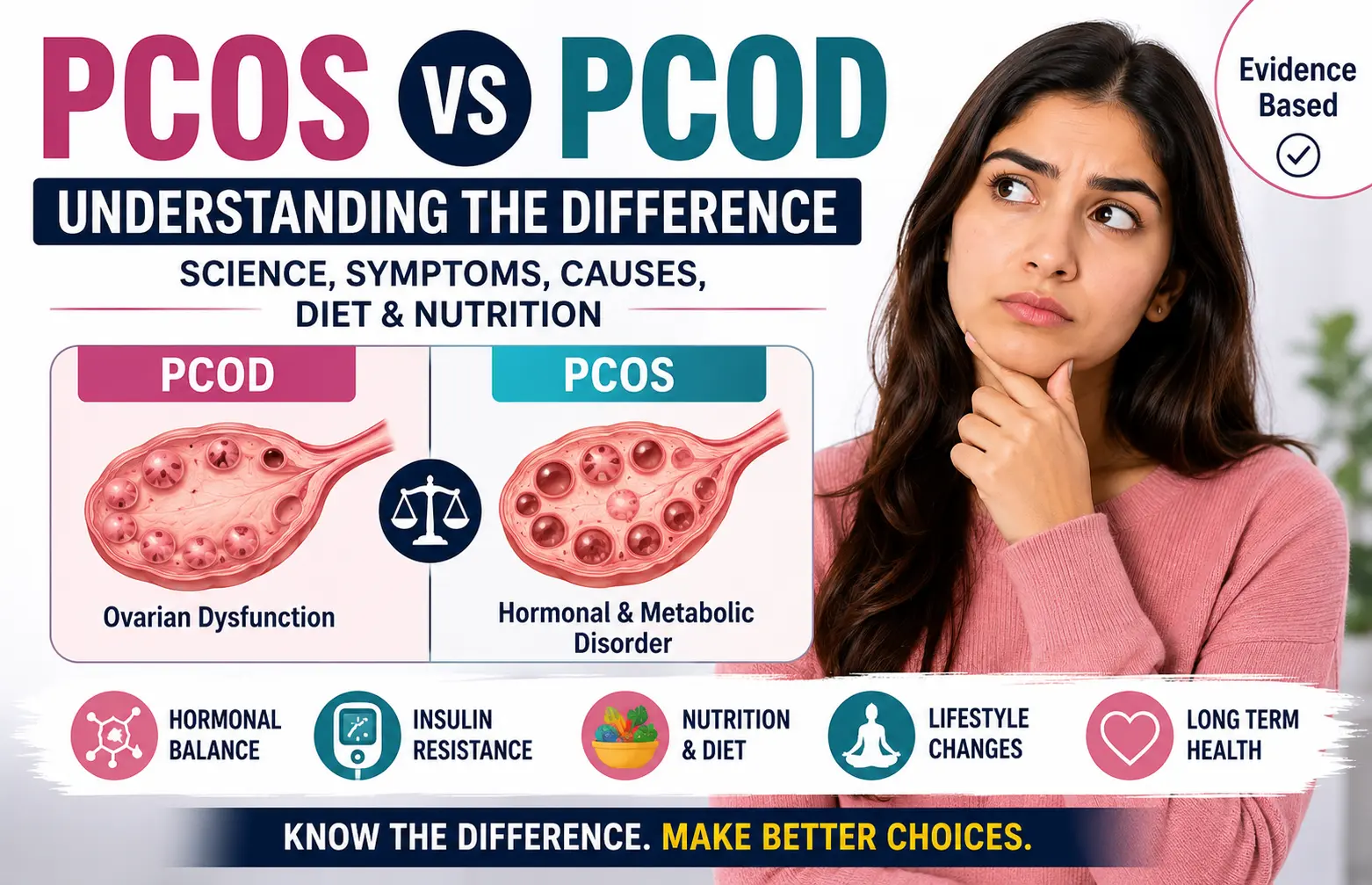
Polycystic Ovarian Disease (PCOD) is a term commonly used in India to describe ovaries containing multiple small follicles that have not matured sufficiently to release an egg. These immature follicles may accumulate within the ovary and are often associated with irregular menstrual cycles and mild hormonal disturbances.
Girls and women described as having PCOD may experience:
- Irregular or delayed menstrual cycles
- Acne and oily skin
- Mild weight gain
- Hair thinning
- Increased facial or body hair growth
- Difficulty maintaining a healthy weight
However, it is important to note that PCOD is not a universally recognized medical diagnosis in major international guidelines. Current international recommendations primarily use the term Polycystic Ovary Syndrome (PCOS), which is a clearly defined endocrine disorder diagnosed using established clinical criteria.¹
PCOS: A Systemic Endocrine-Metabolic Disorder
PCOS is one of the most common endocrine disorders affecting women of reproductive age, with prevalence estimates ranging from 6–13% depending on diagnostic criteria and population studied.²
Unlike a condition confined to the ovaries, PCOS is increasingly understood as a multisystem disorder involving interactions between the ovaries, insulin signaling pathways, adipose tissue, the liver, the brain, and the endocrine system.³
According to the internationally accepted Rotterdam criteria, PCOS is diagnosed when at least two of the following are present after excluding other causes:⁴
- Ovulatory dysfunction (irregular or absent ovulation)
- Clinical or biochemical hyperandrogenism (elevated androgen levels)
- Polycystic ovarian morphology on ultrasound
Importantly, many girls and women with PCOS may have normal ovarian imaging, while others may have polycystic-appearing ovaries without having PCOS. Therefore, ultrasound findings alone are insufficient for diagnosis.
The Central Role of Insulin Resistance
One of the most extensively studied mechanisms in PCOS is insulin resistance.
Research suggests that a large proportion of women with PCOS exhibit reduced responsiveness of body tissues to insulin, resulting in compensatory hyperinsulinemia. Elevated insulin levels stimulate ovarian androgen production and suppress hepatic production of sex hormone-binding globulin (SHBG), increasing circulating free testosterone levels.⁵
This contributes to:
- Irregular ovulation
- Menstrual disturbances
- Acne
- Excess facial and body hair growth
- Weight gain and difficulty losing weight
Notably, insulin resistance can occur even in adolescents and women who are not overweight, highlighting that PCOS is not simply a consequence of obesity.⁶ Diagnosing PCOS during adolescence can be challenging because several symptoms overlap with normal puberty. Understanding which changes are expected and which require medical attention is crucial. Read our guide on symptoms parents should never ignore in teenage girls.
Long-Term Health Implications of PCOS
Because PCOS affects multiple metabolic pathways, its impact extends beyond reproductive health.
Evidence demonstrates increased risks of:⁷⁻⁹
- Prediabetes
- Type 2 diabetes mellitus
- Metabolic syndrome
- Dyslipidemia
- Non-alcoholic fatty liver disease (NAFLD)
- Hypertension
- Obstructive sleep apnea
- Anxiety and depression
For this reason, modern guidelines recommend that PCOS be approached as a long-term metabolic and endocrine condition requiring ongoing monitoring and support.
Why Are PCOS Diagnoses Increasing?
The rising prevalence of PCOS appears to reflect an interaction between genetic susceptibility and modern environmental influences.
Genetic Predisposition
Family history remains one of the strongest risk factors. Daughters and sisters of women with PCOS demonstrate higher rates of insulin resistance, androgen excess, and menstrual irregularities.¹⁰
Sedentary Behaviors
Reduced physical activity, prolonged screen time, inadequate sleep, and lower participation in outdoor activities contribute to worsening insulin sensitivity and metabolic health.¹¹
Chronic Stress
Chronic psychological stress influences the hypothalamic-pituitary-adrenal axis, affecting cortisol secretion, sleep quality, appetite regulation, and reproductive hormone balance.¹²
Dietary Changes
The widespread availability of ultra-processed foods, sugar-sweetened beverages, refined grains, and energy-dense snacks has contributed to increasing rates of obesity and insulin resistance among adolescents worldwide.¹³
The growing prevalence of PCOS among adolescents has made early awareness increasingly important. Unfortunately, many girls continue to remain undiagnosed because symptoms such as acne, irregular periods, or weight gain are often attributed to puberty alone. Learn how parents can identify early warning signs of PCOS in teenagers.
Nutrition: The Foundation of PCOS Management
While medications have an important role in selected patients, current international guidelines consistently emphasize that nutrition and lifestyle interventions remain first-line management for most adolescents and women with PCOS.²
Nutrition influences several biological processes central to PCOS, including:
- Insulin sensitivity
- Blood glucose regulation
- Inflammation
- Satiety and appetite control
- Weight management
- Cardiovascular risk
Rather than focusing on restrictive dieting, the goal is to establish sustainable eating patterns that support healthy growth, hormonal balance, and metabolic health. While nutrition and lifestyle interventions are central to management, timely recognition remains equally important. Many adolescents experience symptoms for years before receiving an accurate diagnosis. Our article on early PCOS symptoms in teen girls explains what parents should watch for.
What Does the Evidence Support?
Research consistently shows benefits from dietary patterns that emphasize:²,¹⁴
- Vegetables and fruits
- Whole grains
- Pulses and legumes
- Nuts and seeds
- Adequate protein intake
- Healthy fats from fish, nuts, and plant oils
- Minimally processed foods
At the same time, reducing intake of:
- Sugar-sweetened beverages
- Highly processed snacks
- Refined carbohydrates
- Excessive saturated fats
may improve insulin sensitivity and cardiometabolic health.
Importantly, no single “PCOS diet” has been proven superior for all patients. The best nutritional strategy is one that is evidence-based, nutritionally adequate, culturally appropriate, and sustainable over the long term.²
Why Nutrition Matters in Adolescents
Adolescence is a critical period of growth and hormonal development. Excessive dieting, rapid weight-loss strategies, and restrictive eating patterns may adversely affect nutritional status, mental wellbeing, and growth.
For adolescents with PCOS, the focus should be on:
- Regular meal timing
- Balanced macronutrient intake
- Adequate protein consumption
- Sufficient dietary fiber
- Healthy sleep habits
- Consistent physical activity
- Positive body image and mental wellbeing
Nutrition counseling delivered by qualified healthcare professionals can help adolescents develop lifelong habits that support both reproductive and metabolic health.
Where Do Supplements Fit In?
While supplements such as inositols, vitamin D, omega-3 fatty acids, and selected micronutrients have been studied in PCOS, current evidence suggests that they should be considered adjuncts rather than primary therapy.²
The strongest and most consistent evidence continues to support:
- Lifestyle modification
- Evidence-based nutrition therapy
- Physical activity
- Appropriate medical management when indicated
Supplements may be considered in selected individuals after nutritional assessment and clinical evaluation, but they should not replace foundational dietary and lifestyle interventions.
The Takeaway
For parents, one of the most important steps is recognizing symptoms early rather than waiting for menstrual irregularities to "settle on their own." Persistent acne, excessive hair growth, unexplained weight gain, or prolonged cycle irregularity may warrant professional evaluation. Read our complete guide on when parents should seek help for suspected PCOS in teenage girls.
PCOS is far more than a menstrual disorder. It is a complex endocrine-metabolic condition influenced by genetics, insulin resistance, lifestyle behaviors, and nutritional factors. Although the term PCOD is commonly used to describe ovarian changes, contemporary medical practice increasingly focuses on identifying and managing PCOS using standardized diagnostic criteria.
The encouraging message is that early intervention can make a meaningful difference. Evidence-based nutrition, regular physical activity, adequate sleep, stress management, and appropriate medical care can improve menstrual regularity, metabolic health, and long-term wellbeing.
For adolescents and young women, addressing PCOS is not simply about regulating periods—it is an investment in future reproductive, metabolic, cardiovascular, and overall health.
References
- Teede HJ, Misso ML, Costello MF, et al. International Evidence-Based Guideline for the Assessment and Management of Polycystic Ovary Syndrome. Hum Reprod. 2018.
- Monash University & ASRM. International Evidence-Based Guideline for PCOS 2023 Update.
- Azziz R, Carmina E, Chen Z, et al. Polycystic ovary syndrome. Nat Rev Dis Primers. 2016;2:16057.
- Rotterdam ESHRE/ASRM-Sponsored PCOS Consensus Workshop Group. Hum Reprod. 2004.
- Dunaif A. Insulin resistance and the polycystic ovary syndrome. Endocr Rev. 1997.
- Lim SS, Davies MJ, Norman RJ, Moran LJ. Overweight, obesity and central obesity in women with PCOS. Hum Reprod Update. 2012.
- Moran LJ, Misso ML, Wild RA, Norman RJ. Impaired glucose tolerance and type 2 diabetes in PCOS. Hum Reprod Update. 2010.
- Dokras A. Cardiovascular disease risk in women with PCOS. Steroids. 2013.
- Cooney LG, Dokras A. Depression and anxiety in PCOS. Fertil Steril. 2017.
- Franks S. Genetic and environmental origins of PCOS. Nat Rev Endocrinol. 2018.
- Carson BP. The impact of sedentary behaviour on metabolic health. J Sports Sci. 2018.
- Chrousos GP. Stress and disorders of the stress system. Nat Rev Endocrinol. 2009.
- Monteiro CA, Cannon G, Levy RB, et al. Ultra-processed foods and health outcomes. Public Health Nutr. 2019.
- Moran LJ, Ko H, Misso M, et al. Dietary composition in the treatment of PCOS. J Acad Nutr Diet. 2013.
Frequently Asked Questions

Related Articles