Beyond Puberty: Recognizing and Managing PCOS in Teen Girls Through Clinical and Ayurvedic Wisdom
When I sit down in my practice with teenage girls and their deeply worried parents, a familiar scenario almost always plays out. A young girl presents with stubborn acne, unpredictable cycles, and unexplained weight shifts, only for well-meaning family members to brush it aside with, “Kuch nahi hoga, umar ke saath theek ho jaega” (Nothing is wrong; it will settle down with age).
In modern adolescence, the boundary between normal developmental fluctuations and underlying hormonal disorders has become alarmingly blurred. Polycystic Ovary Syndrome (PCOS) frequently develops silently during the teenage years, disguising itself as standard puberty struggles.
Ignoring these signs as "just a phase" can allow underlying insulin resistance and chronic inflammation to compound over time. By looking at PCOS through a dual lens—combining the diagnostic precision of modern endocrinology with the root-cause, tissue-nourishing wisdom of classical Ayurveda—we can support our young adults toward long-term metabolic and hormonal harmony.
The Modern Clinical Perspective on Teen PCOS
Medically, PCOS is a complex endocrine and metabolic disorder characterized by hyperandrogenism (excess male hormones), ovulatory dysfunction, and metabolic irregularities. While traditionally diagnosed in adult women, clinical data indicates that the pathological roots often take hold during perimenarche [ADA, 2024; NIH, 2023].
Why Early Detection Matters
The challenge in teenagers lies in the natural maturation of the hypothalamic-pituitary-ovarian (HPO) axis, where irregular cycles can occur in the first one to two years post-menarche. However, clinicians watch for specific red flags:
-
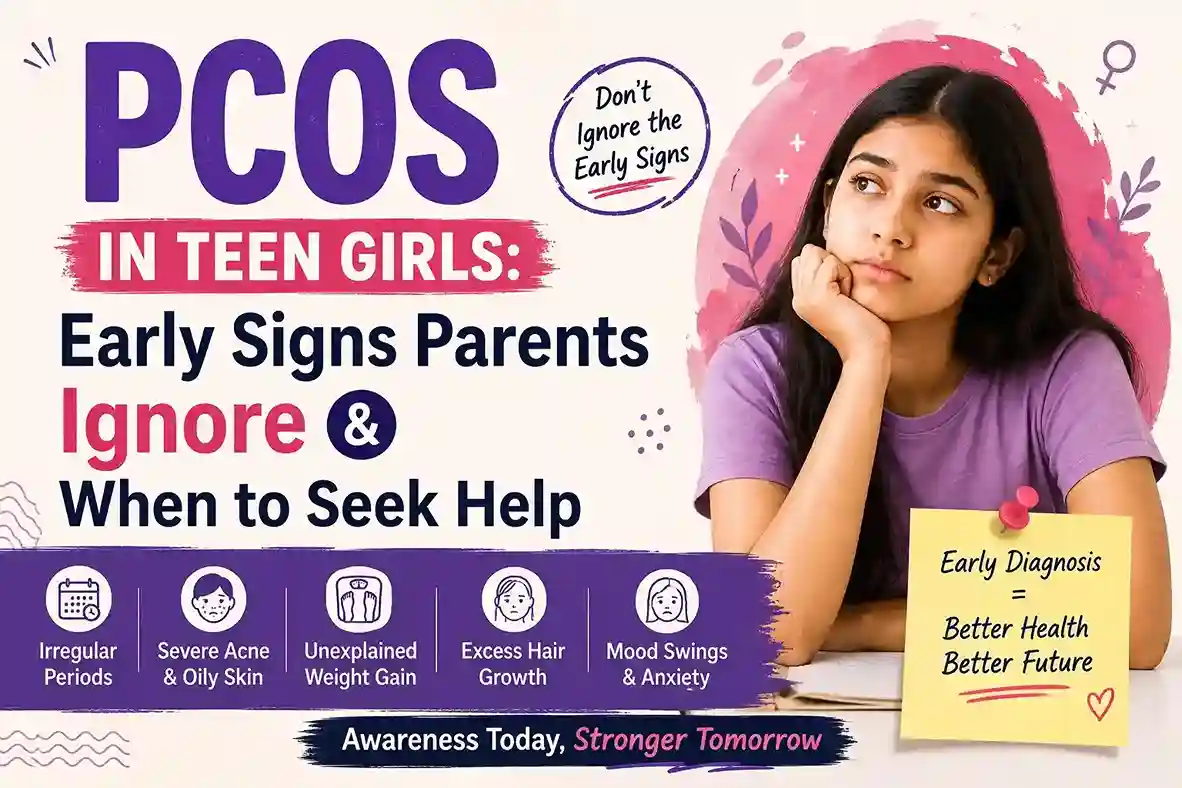
Persistent Menstrual Irregularity: Cycles extending beyond $45$ days, fewer than $8$ periods a year, or prolonged heavy bleeding [ACOG, 2023].
-
Insulin Resistance Markers: Hyperinsulinemia frequently drives ovarian androgen production, manifesting as central adiposity and cutaneous symptoms.
-
Cutaneous Manifestations: Severe, cystic acne along the jawline and chin, accompanied by unwanted terminal hair growth (hirsutism) due to elevated free androgens.
Left unmanaged, adolescent PCOS increases the long-term risk of type 2 diabetes, dyslipidemia, metabolic syndrome, and psychological distress [Endocrine Society, 2022].
The Ayurvedic Dimension: Yvyapad, Artava Dushti, and Rasadi Dhatus
Long before modern endocrinology mapped hormonal pathways, classical Ayurveda detailed female reproductive and metabolic disorders under categories like Artava Dushti (vitiation of menstrual tissue/fluid) and broader endocrine imbalances akin to deep-seated metabolic stagnation.
1. Doshas, Agni, and Srotas (Channels)
Ayurveda views PCOS not merely as an ovarian issue, but as a systemic condition rooted in Agni Mandhya (weakened digestive and metabolic fire) and Sroto-rodha (obstruction of micro-circulatory channels).
-
Kapha and Vata Imbalance: Heavy, processed, cold, and sweet foods (Guru, Madhura, Shita Ahara) provoke Kapha and Meda dhatu (adipose tissue), leading to sluggish metabolism and channel blockage. This eventually vitiates Vata, disrupting the downward flow (Apana Vayu) responsible for normal menstruation.
-
Dhatu Depletion or Obstruction: The pathology affects Rasa (plasma) and Artava dhatu (reproductive tissue), preventing proper nourishment and leading to cyst formation or anovulation.
2. Classical Text References
-
Charaka Samhita (Chikitsasthana, Chapter 30) details how vitiated doshas circulating through the channels can obstruct reproductive pathways, leading to structural and functional abnormalities in Artava.
-
Sushruta Samhita (Sharirasthana, Chapter 2) emphasizes that balanced Agni and clean micro-channels are essential for the proper formation and release of healthy Artava.
Botanical and Dietary Support for Hormonal Balance
In my clinical experience, integrating gentle Ayurvedic herbs alongside modern dietary guidelines helps restore metabolic efficiency:
-
Fenugreek / Methi (Trigonella foenum-graecum): Valued in traditional medicine and supported by modern studies for improving insulin sensitivity and balancing post-prandial glucose [Udayakumar et al., 2011].
-
Spearmint / Pudina: Clinical studies have noted its mild anti-androgenic properties, which may assist in managing unwanted facial hair growth.
-
Turmeric / Haridra (Curcuma longa): Acts as a powerful anti-inflammatory and Lekhana (scraping/clearing) agent, supporting metabolic clarity and reducing systemic inflammation.
Disclaimer: Herbal supplements should always be used under professional guidance, especially when coordinating with conventional pediatric or endocrine care.
Practical Ways to Support Teen Metabolic Health
Supporting a teenager through PCOS requires compassion, patience, and sustainable lifestyle changes (Dinacharya and Ahara-Vihara). Avoid harsh crash diets or body shaming, which exacerbate emotional stress.
-
Nourish with Whole Foods: Emphasize fresh home-cooked meals rich in fiber, seasonal vegetables, whole grains (Jowar, Bajra, red rice), and clean proteins. Minimize refined sugars and packaged junk food that spike insulin levels.
-
Encourage Joyful Movement: Engage in regular physical activity—such as dancing, swimming, cycling, or yoga (e.g., Dhanurasana, Bhujangasana—which gently massage the abdominal organs and improve pelvic circulation).
-
Prioritize Restorative Sleep: Late-night screen time disrupts circadian rhythms, altering cortisol and insulin dynamics. Establish a calm, screen-free wind-down routine.
-
Foster Open Communication: Create a safe, judgment-free space for your daughter to discuss physical and emotional changes. Emotional well-being is vital for hormonal equilibrium.
Medical Disclaimer: The content in this article is provided for educational and informational purposes only and does not constitute formal medical advice, diagnosis, or treatment. Always consult a qualified pediatrician, endocrinologist, or Ayurvedic practitioner before initiating any medical or herbal treatment plan for adolescents.
References & Further Reading
Modern Medical References:
-
American College of Obstetricians and Gynecologists (ACOG). (2023). Evaluation and Management of Polycystic Ovary Syndrome in Adolescents. Clinical Guideline.
-
Endocrine Society. (2022). Diagnosis and Management of Polycystic Ovary Syndrome. Journal of Clinical Endocrinology & Metabolism.
-
Udayakumar, R., et al. (2011). Hypoglycemic and hypolipidemic effects of fenugreek seed extract in experimental rats. International Journal of Pharmacology.
Classical Ayurvedic Texts & Books:
-
Charaka Samhita, Chikitsasthana, Chapter 30 (Yoni Vyapad Chikitsa) - Comprehensive discussion on female reproductive health, channel blockages, and doshic management.
-
Sushruta Samhita, Sharirasthana, Chapter 2 (Shukra Artava Shuddhi) - Classical perspective on the formation and purification of reproductive fluids.
FAQs
Q1: Why is PCOS so difficult to diagnose in teenagers?
A1: Puberty naturally brings hormonal fluctuations, irregular periods, and skin breakouts, making it easy to mistake early PCOS signs for normal adolescent changes.
Q2: What are the primary red-flag signs of PCOS in teen girls?
A2: Key signs include prolonged menstrual irregularity (cycles >45 days), sudden unexplained weight gain around the belly, severe jawline acne, unwanted facial hair growth (hirsutism), and dark skin patches (acanthosis nigricans).
Q3: How does Ayurveda view the root cause of PCOS?
A3: Ayurveda views PCOS as a systemic imbalance involving weakened digestive fire (Agni), toxin accumulation (Ama), and vitiated Kapha and Vata doshas that obstruct the micro-channels (Srotas) supplying the reproductive tissues.
Q4: Is insulin resistance always present in teenage PCOS?
A4: Insulin resistance is a major underlying driver in a significant percentage of PCOS cases, contributing to weight gain, sugar cravings, and increased androgen production.
Q5: Can lifestyle modifications alone help manage teen PCOS?
A5: Yes, consistent lifestyle changes—including balanced nutrition, regular physical activity, stress management, and adequate sleep—form the cornerstone of managing and improving PCOS symptoms.
Q6: Does having PCOS mean a teenager will definitely face infertility later in life?
A6: Not at all. While PCOS can affect ovulation, early intervention, hormonal management, and healthy lifestyle habits greatly improve long-term reproductive and metabolic outcomes.
Q7: How can parents support a teenager dealing with PCOS emotionally?
A7: Parents should avoid body shaming or dismissing concerns as "teen drama," offering empathetic listening, open communication, and supportive mental health care.
Q8: Are Ayurvedic herbs safe for adolescents with hormonal imbalances?
A8: Many classical herbs (like Haridra and Methi) are supportive when used correctly, but they should always be integrated under the guidance of a qualified practitioner.
Q9: When should a parent consult a doctor for menstrual irregularities?
A9: You should consult a physician if periods remain irregular past the first two years of menarche, if cycles exceed 45 days, or if multiple physical symptoms appear together.
Q10: What role does physical activity play in hormonal regulation?
A10: Regular movement improves cellular insulin sensitivity, aids in weight management, lowers systemic inflammation, and naturally supports balanced endocrine function.
Frequently Asked Questions
Many people think only overweight girls get PCOS, but lean girls can also develop hormonal imbalance and irregular cycles.

Related Articles