Unlocking Vitality: Can Ginger and Honey Support Premature Ejaculation Management Naturally?
In my practice as an educator and wellness consultant, I frequently sit across from men who carry a heavy, unspoken burden. Intimate health challenges, particularly premature ejaculation (PE), affect millions globally, yet social stigma often forces individuals to suffer in silence or turn to rushed, unverified pharmaceutical solutions. When patients ask me for a safe, time-tested, and accessible way to support their sexual longevity without aggressive side effects, my mind naturally turns to the timeless synergy of traditional botanical wisdom.
Among household remedies, the combination of ginger and honey has earned a remarkable reputation. But beyond the folklore, how do modern clinical science and classical Ayurveda view this powerful duo? Let us look past the hype and explore how these ingredients can realistically support male sexual wellness.
Understanding Premature Ejaculation: Clinical and Ayurvedic Lenses
From a modern medical standpoint, premature ejaculation is generally characterized by:
-
Ejaculation that occurs consistently within one minute of vaginal penetration.
-
A persistent inability to delay ejaculation during intercourse.
-
Resulting psychological distress, frustration, or relationship strain [NIH, 2022].
In my clinical discussions, I emphasize that PE is rarely just a physical glitch; it is often tied to performance anxiety, hypersensitive nerve endings, or micro-circulatory deficits.
Looking through the classical lens of Ayurveda, this condition is viewed primarily as an imbalance of Vata dosha—specifically Apana Vayu, the sub-vata governing elimination and reproductive functions. Furthermore, when digestive fire (Agni) is weakened, it impairs the formation of Dhatus (body tissues), eventually depleting Shukra Dhatu (the reproductive fluid) and weakening Ojas (our core vitality and immunity).
Medical Disclaimer: This article is for educational and informational purposes only and should not be taken as professional medical advice, diagnosis, or treatment. Always consult a qualified healthcare provider or Ayurvedic practitioner for any personal health concerns.
Ginger: The Circulation Booster and Vata Balancer
Ginger (Zingiber officinale, known as Ardraka or Shunthi in Sanskrit) has been a staple in traditional healing systems for millennia. Known for its pungent taste (Katu Rasa) and heating energy (Ushna Virya), ginger acts as a powerful natural pacifier for aggravated Vata and Kapha doshas.
-
Enhanced Blood Flow: Modern pharmacological reviews indicate that active constituents like gingerols help improve macro- and micro-circulation, supporting healthy blood delivery to peripheral tissues [PubMed, 2019].
-
Oxidative Stress Reduction: Ginger possesses potent antioxidant properties that help combat free radicals, which are known to negatively impact vascular and reproductive health.
-
Ayurvedic Perspective: According to classical texts such as Bhavaprakasha Nighantu, ginger stimulates Agni (metabolic fire) and clears blockages in bodily channels (Srotas), allowing smooth, unhindered energy and blood flow throughout the reproductive system.
Honey: The Natural Energizer and Yogavahi Catalyst
Raw, organic honey is far more than a sweet kitchen staple. In Ayurveda, honey is classified as a Yogavahi—a substance that penetrates deep into bodily tissues and enhances the therapeutic properties of any herb it is mixed with.
-
Nervous System and Cellular Energy: Honey provides an immediate source of clean cellular energy and supplies essential micronutrients, including B-complex vitamins and zinc, which are vital for hormonal regulation and nerve transmission [USDA Food Data].
-
Ayurvedic Perspective: As detailed in the Charaka Samhita (Sutra Sthana, Annapanavidhi Adhyaya), honey nourishes all bodily tissues (Dhatus) without aggravating Kapha when used correctly. Combined with ginger, it creates a balanced formulation that warms the core while soothing erratic nervous impulses.
How to Use Ginger and Honey Practically
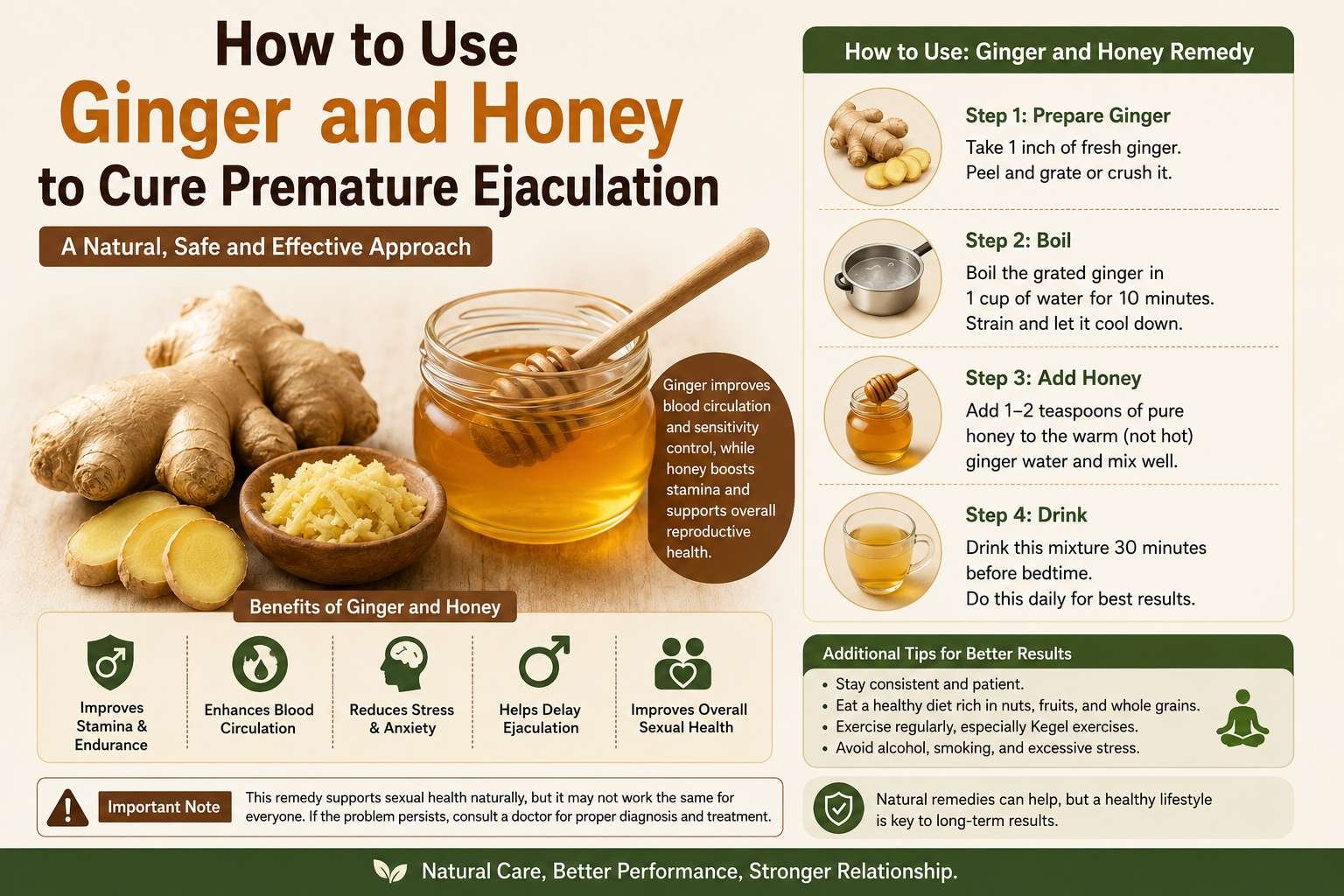
To experience the supportive benefits of this remedy, consistency and correct preparation are vital. In my practice, I suggest these three reliable methods:
1. The Daily Ginger-Honey Paste
-
Ingredients: 1 teaspoon of freshly extracted ginger juice and 1 teaspoon of raw, organic honey.
-
Method: Blend them into a uniform, smooth paste. Consume it in the morning on an empty stomach or roughly 30 minutes before bedtime.
-
Why it works: This direct method stimulates local circulation, ignites digestive fire, and gently nurtures stamina over weeks of disciplined intake.
2. Soothing Ginger Herbal Tea with Honey
-
Ingredients: 1 cup of water, 1 teaspoon of freshly grated ginger, and 1 teaspoon of honey.
-
Method: Simmer the grated ginger in water for 5 to 7 minutes. Strain the liquid and allow it to cool down until it is comfortably warm (never add honey to boiling water, as Ayurveda cautions against heated honey). Stir in the honey.
-
When to drink: Twice a day—once in the morning and once about an hour before intimate activity. This helps reduce systemic stress and calms nervous tension.
3. External Abdominal Massage Oil (Topical Support)
-
Ingredients: 1 tablespoon of ginger juice, 1 tablespoon of honey, and 1 tablespoon of carrier oil (like sesame or coconut oil to buffer intensity).
-
Method: Mix thoroughly and perform a gentle, light massage on the lower abdomen or inner thighs. Leave it on for 15 minutes, then wash off with warm water.
-
Caution: Always perform a patch test first. Never apply raw ginger juice directly to sensitive genital skin, as its intense heating quality can cause severe irritation or burning.
Realistic Expectations: How Long Does It Take?
Natural remedies do not work like overnight synthetic suppressants. When I guide individuals through lifestyle adjustments, I always remind them that biological tissues require time to regain stability. Most men notice steady, subtle improvements in control, stamina, and confidence after 2 to 4 weeks of consistent daily use, provided underlying lifestyle factors are also addressed.
Comprehensive Lifestyle Support for Better Intimate Health
Relying solely on a kitchen remedy is rarely enough if daily habits work against your goals. To truly support your body, incorporate these foundational practices:
-
Kegel Exercises: Strengthening your pelvic floor muscles gives you superior physiological control over ejaculation timing.
-
Stress Management: High anxiety triggers a sympathetic nervous system overdrive ("fight or flight"), which drastically shortens arousal control. Practices like Pranayama (breathwork) and meditation are immensely helpful.
-
Dietary Mindfulness: Minimize highly processed foods, excess refined sugars, smoking, and alcohol, all of which compromise vascular health and hormonal balance.
-
Restorative Sleep: Deep, consistent nighttime sleep is non-negotiable for testosterone regulation and nervous system repair.
References & Further Reading:
-
Modern Medical References:
-
National Institutes of Health (NIH). (2022). Clinical guidelines on the evaluation and management of premature ejaculation. Journal of Sexual Medicine.
-
PubMed Central. (2019). The role of Zingiber officinale in human vascular and reproductive health: A systematic review. PMCID: PMC6611910.
-
-
Classical Ayurvedic Texts & Books:
-
Charaka Samhita, Sutra Sthana, Chapter 27 (Annapanavidhi Adhyaya) - Detailed properties of honey, food combinations, and tissue nourishment.
-
Bhavaprakasha Nighantu, Guduchyadi Varga - Classical attributes of Ardraka (Ginger) and its impact on Agni and Vata dosha.
-
Frequently Asked Questions

Related Articles