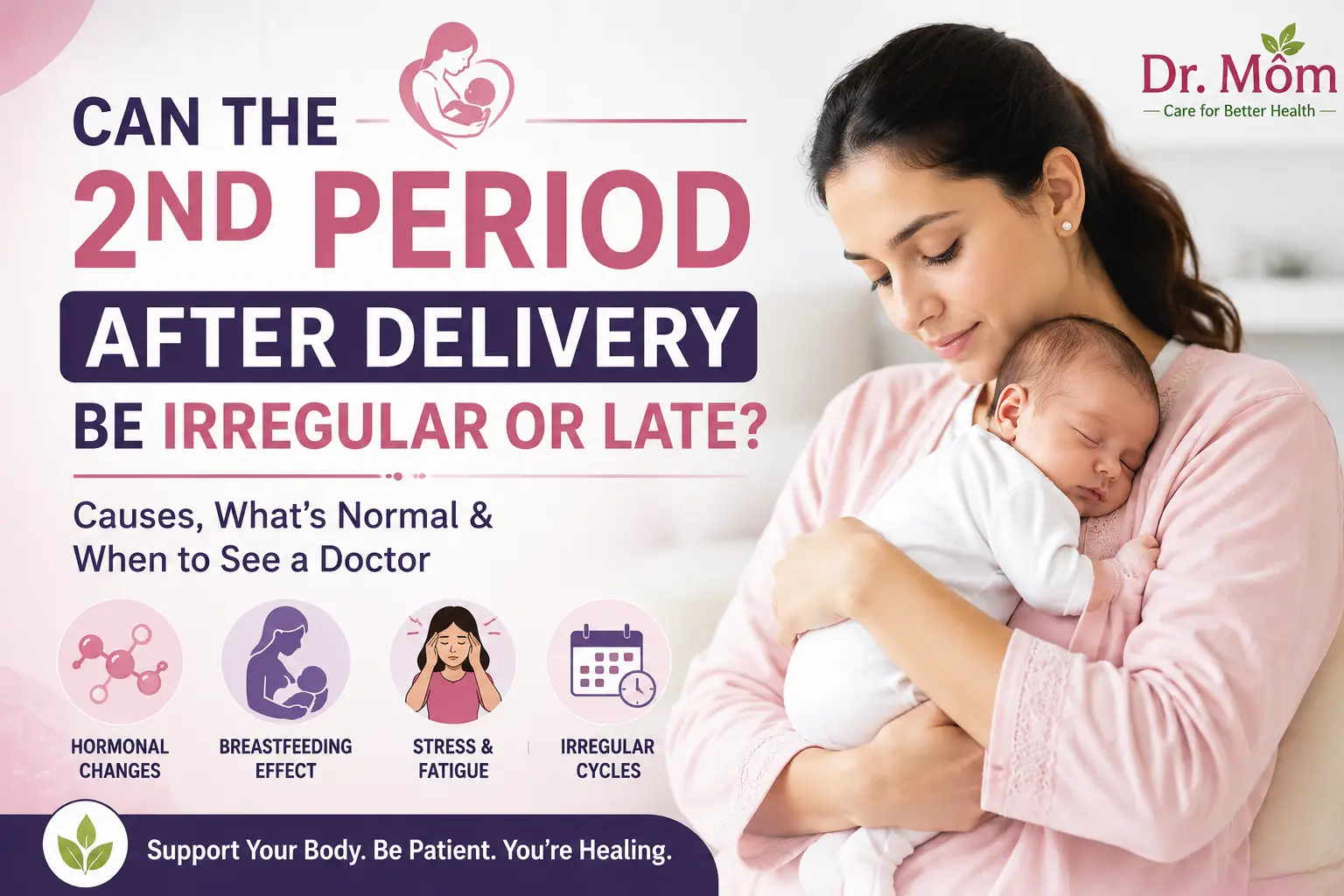
Can the 2nd Period After Delivery Be Irregular or Late? Causes, Breastfeeding, Pregnancy & When to See a Doctor
Yes. The second period after delivery can be irregular, delayed, lighter, heavier, shorter, or longer than expected. This is particularly common when breastfeeding because prolactin can suppress ovulation. Even after menstruation returns, the hormonal pattern may take time to become predictable. However, a late period after childbirth should not automatically be attributed to breastfeeding because pregnancy can occur before cycles become regular.
Quick Summary: What You Should Know
-
The second postpartum period can be irregular or late, especially when breastfeeding.
-
Hormonal fluctuations and changing ovulation patterns are common after pregnancy.
-
Breastfeeding can delay menstruation, sometimes for many months.
-
You can ovulate before your first or second postpartum period, so pregnancy is possible even when periods are irregular.
-
Very heavy bleeding, severe pain, fever, foul-smelling discharge, dizziness, or a suspected pregnancy warrants medical evaluation.
Why Does the Menstrual Cycle Change After Childbirth?
Pregnancy temporarily changes almost every aspect of reproductive physiology. Estrogen and progesterone rise dramatically during pregnancy and then change rapidly after the placenta is delivered. At the same time, prolactin rises to support breast milk production.
The reproductive system therefore does not necessarily return to a predictable 28-day cycle immediately.
Another important distinction is often missed: the bleeding during the first few weeks after childbirth is usually lochia, not a menstrual period. Lochia is postpartum bleeding associated with the uterus shedding blood, mucus and tissue after delivery. It gradually decreases and changes in color before stopping.
A true menstrual period occurs after the reproductive hormonal cycle begins functioning again and ovulation resumes.
This distinction matters when someone says, "I had my first period after delivery." The timing should ideally be confirmed based on the pattern of bleeding and the postpartum timeline.
Can the 2nd Period After Delivery Be Irregular or Late?
Yes. The second period may be quite different from the first and does not necessarily establish your new normal cycle. Ovulation may not occur at a predictable time during the early postpartum months, particularly when breastfeeding. As a result, the interval between periods can vary considerably.
For example, a woman may experience:
-
First period 7 weeks after delivery
-
Second period 5 weeks later
-
Third period 7 or 8 weeks later
Another woman may have a different pattern altogether.
This variation does not automatically mean there is a hormonal disorder.
The menstrual cycle is controlled by communication between the hypothalamus, pituitary gland and ovaries. After pregnancy, this system gradually resumes its usual rhythm. Breastfeeding can further modify this process through prolactin.
What Causes a Late or Irregular Second Period After Delivery?
Several factors can contribute, and more than one may be present at the same time.
1. Breastfeeding and Prolactin
Breastfeeding is one of the most important factors affecting postpartum menstruation.
Frequent breastfeeding stimulates prolactin production. Higher prolactin levels can suppress the hormonal signals required for regular ovulation.
Women who exclusively breastfeed, particularly when feeding frequently at night, may therefore experience:
-
Delayed return of periods
-
Longer gaps between periods
-
Occasional skipped cycles
-
Unpredictable ovulation
-
Changes in menstrual flow
If breastfeeding frequency decreases, night feeds are reduced, or formula/solid foods are introduced, reproductive function may gradually change.
The exact timing varies significantly between women. The NHS notes that women who fully breastfeed, including at night, may not have periods again until breastfeeding is reduced.
An important contraception point
Breastfeeding should not automatically be considered contraception.
The Lactational Amenorrhea Method (LAM) can provide temporary contraception only when specific conditions are simultaneously met: the mother has not resumed menstruation, is fully or nearly fully breastfeeding, and is less than six months postpartum.
Outside those conditions, another reliable contraceptive method should be considered.
2. Ovulation May Still Be Irregular
A menstrual period generally follows ovulation. If ovulation occurs later than usual, the period will also arrive later.
This is one reason why counting from the first postpartum period and expecting the next one exactly 28 or 30 days later can create unnecessary anxiety.
Postpartum ovulation may be:
-
Earlier than expected
-
Later than expected
-
Occasionally absent during a particular cycle
Most importantly, ovulation can occur before a period.
That means a woman can become pregnant before seeing her next menstrual bleeding. The NHS specifically notes that pregnancy can occur as early as three weeks after childbirth, even while breastfeeding and before periods have returned.
3. Postpartum Stress and Sleep Deprivation
Caring for a newborn can dramatically alter sleep, meal timing, activity levels and emotional well-being.
Chronic stress and inadequate sleep can affect reproductive hormone signaling. Stress is also a recognized contributor to late or missed periods generally.
This does not mean that every delayed period is "because of stress." Rather, stress can be one component of a much larger postpartum hormonal adjustment.
Practical approach
Instead of trying to achieve perfect relaxation, focus on small, realistic changes:
-
Rest whenever practical
-
Accept help with household responsibilities
-
Avoid unnecessarily restrictive diets
-
Eat at regular intervals
-
Take short walks if medically appropriate
-
Practice slow breathing for a few minutes daily
4. Rapid Weight Loss or Weight Gain
Some women lose pregnancy weight rapidly after delivery, while others gain weight during the postpartum period.
Significant changes in body weight or inadequate calorie intake can influence menstrual function.
A breastfeeding mother should be particularly cautious about aggressive dieting. The postpartum period is a time of recovery, and nutritional requirements may remain elevated when producing breast milk.
Rather than pursuing rapid weight loss, focus on adequate protein, vegetables, whole grains, fruits, healthy fats and appropriate hydration.
5. Postpartum Nutrition and Iron Status
Blood loss during childbirth and subsequent menstrual bleeding can contribute to iron depletion in some women.
Iron deficiency does not explain every irregular period, but poor nutrition or significant iron deficiency can contribute to fatigue and reduced overall wellbeing.
If you have persistent fatigue, breathlessness, dizziness, unusual weakness or heavy menstrual bleeding, discuss whether a blood count and iron assessment are appropriate with your healthcare professional.
Do not start high-dose iron supplements simply because your period is irregular. Supplementation should be based on your individual situation and, where appropriate, testing.
6. Thyroid Changes After Pregnancy
The thyroid gland plays an important role in menstrual and reproductive health.
Some women develop thyroid dysfunction during the postpartum period. Depending on the condition and phase, symptoms may include:
-
Unusual tiredness
-
Palpitations
-
Anxiety or irritability
-
Feeling unusually cold or hot
-
Weight changes
-
Hair changes
-
Menstrual irregularity
If menstrual irregularity continues or occurs together with these symptoms, a doctor may consider thyroid testing.
7. Hormonal Contraception
Some contraceptive methods can change menstrual bleeding patterns.
Depending on the method, a woman may experience:
-
Lighter periods
-
Spotting
-
Irregular bleeding
-
Longer gaps between periods
-
Complete absence of bleeding
Therefore, when assessing a late second period, it is useful to consider whether contraception was started after delivery.
What Can the Second Postpartum Period Look Like?
There is no single "correct" appearance for the second period after childbirth.
| Change | What may happen |
|---|---|
| Timing | Earlier or later than expected |
| Flow | Lighter or heavier than before pregnancy |
| Duration | Shorter or longer |
| Cramps | Different from pre-pregnancy cramps |
| Cycle length | May vary from one cycle to another |
| Spotting | Can occur depending on hormones or contraception |
| Breastfeeding effect | Cycles may remain unpredictable |
An irregular cycle by itself does not establish a diagnosis.
The more useful question is whether the pattern is gradually settling and whether there are any warning symptoms.
How Can You Support Menstrual Health After Delivery?
The goal should not be to "force" the period to become regular immediately.
Instead, support recovery by addressing nutrition, sleep, movement, stress and medical needs.
1. Eat for Recovery, Not Just Weight Loss
Build meals around:
-
Protein-rich foods
-
Green vegetables
-
Seasonal fruits
-
Whole grains
-
Pulses and legumes
-
Nuts and seeds
-
Healthy fats
-
Adequate fluids
If you are breastfeeding, avoid extreme calorie restriction unless specifically advised by a qualified healthcare professional.
2. Include Iron-Rich Foods
Useful dietary sources include:
-
Lentils and beans
-
Green leafy vegetables
-
Sesame seeds
-
Pumpkin seeds
-
Nuts
-
Meat or eggs for women who consume them
-
Iron-fortified foods where appropriate
Vitamin C-rich foods can help improve absorption of non-heme iron from plant foods.
If iron deficiency is suspected, dietary changes may not be enough and medical assessment may be necessary.
3. Resume Physical Activity Gradually
Walking is often a practical starting point once your obstetric or healthcare provider has cleared you for activity.
Avoid comparing your postpartum recovery with another woman's.
Recovery after an uncomplicated vaginal birth, cesarean delivery, significant blood loss or other complications can look very different.
4. Protect Sleep Where Possible
A newborn makes uninterrupted sleep difficult. Rather than expecting perfect sleep, aim to increase total rest wherever practical.
Ask family members or your support network to help with non-feeding responsibilities when possible.
5. Track Your Bleeding
A simple menstrual diary can be surprisingly useful.
Record:
-
First day of bleeding
-
Number of days
-
Approximate flow
-
Pain severity
-
Spotting
-
Breastfeeding frequency
-
Contraceptive use
This information can help your doctor identify patterns if irregularity persists.
Ayurvedic Perspective on Postpartum Menstrual Changes
Ayurveda traditionally gives considerable importance to postpartum recovery, including restoration of strength, digestion, sleep and reproductive health.
From an Ayurvedic perspective, the postpartum period is often associated with increased Vata, particularly because childbirth involves significant physiological change, tissue depletion and movement-related processes.
However, Ayurvedic concepts should complement—not replace—modern postpartum assessment.
Gentle Ayurvedic-inspired practices
For a healthy woman who has been medically cleared after delivery, practical supportive habits may include:
-
Eating warm, freshly prepared meals
-
Maintaining regular meal timing
-
Avoiding prolonged fasting
-
Supporting adequate rest
-
Using gentle breathing or relaxation practices
-
Gradually returning to movement
-
Maintaining adequate hydration
What about Ayurvedic herbs?
This is where caution is particularly important.
A herb that is traditionally used for menstrual health is not automatically appropriate during breastfeeding. Herbal constituents can enter breast milk, and safety data for many Ayurvedic formulations during lactation are limited.
Therefore, postpartum women—especially breastfeeding mothers—should not self-prescribe concentrated herbal preparations to "bring periods back" or "balance hormones."
A qualified Ayurvedic physician should consider:
-
Prakriti
-
Vikriti
-
Postpartum stage
-
Breastfeeding status
-
Digestive function
-
Bleeding pattern
-
Current medicines
-
Medical history
before recommending an internal herbal formulation.
Can You Take Herbs to Make a Late Period Come?
There is no universally safe Ayurvedic or herbal remedy that should be taken simply to force a postpartum period to start. A delayed period may be caused by breastfeeding, pregnancy, hormonal changes, thyroid problems, contraception or other factors. Identifying the cause is more important than trying to trigger bleeding.
This is particularly important when breastfeeding.
Avoid taking self-prescribed "period-opening" or uterine-stimulating herbal mixtures without professional guidance.
If pregnancy is possible, take a pregnancy test before considering any medicine or herbal preparation intended to affect menstruation.
When Is a Late Second Period a Reason to See a Doctor?
A delayed period is not automatically an emergency. However, medical evaluation becomes important when the pattern is accompanied by concerning symptoms.
Seek prompt medical care for:
-
Very heavy vaginal bleeding
-
Severe or worsening pelvic/abdominal pain
-
Fever or chills
-
Foul-smelling vaginal discharge
-
Fainting or significant dizziness
-
Shortness of breath or marked weakness
-
Persistent bleeding between periods
-
Repeatedly absent periods when pregnancy has been excluded
-
Symptoms suggesting thyroid dysfunction
-
A positive pregnancy test with pain or bleeding
Sudden or very heavy postpartum bleeding, particularly when accompanied by weakness or feeling faint, requires urgent assessment.
What If the Second Period Is Very Late?
Start with the basics.
Step 1: Consider breastfeeding
Are you breastfeeding exclusively or frequently? Has the feeding pattern recently changed?
Step 2: Consider pregnancy
If you have had unprotected sex, pregnancy should be considered—even if you are breastfeeding.
Step 3: Review contraception
Think about any recent changes in contraceptive pills, injections, implants or intrauterine contraception.
Step 4: Look at your overall recovery
Consider major weight changes, inadequate nutrition, severe stress, sleep deprivation or significant illness.
Step 5: Speak with your doctor if the pattern persists
Depending on your symptoms and history, your clinician may decide whether examination or tests such as pregnancy testing, blood count or thyroid assessment are appropriate.
Second Period After Delivery: What Is Normal vs What Needs Attention?
| Usually can happen | Needs medical assessment |
|---|---|
| Period comes later than expected | Extremely heavy bleeding |
| Flow is somewhat different | Severe pelvic pain |
| Cycle length varies | Fever or foul-smelling discharge |
| Mildly different cramps | Fainting or severe dizziness |
| Breastfeeding-related irregularity | Repeatedly absent periods without an obvious explanation |
| Occasional spotting depending on contraception | Positive pregnancy test with concerning symptoms |
Frequently Asked Questions
Is it normal for the second period after delivery to be late?
Yes. The second postpartum period can be delayed because ovulation may still be irregular, particularly during breastfeeding. Hormonal recovery varies from woman to woman, so the first few cycles may not follow the pre-pregnancy pattern.
Can breastfeeding delay the second period?
Yes. Frequent breastfeeding increases prolactin, which can suppress ovulation and delay or disrupt menstrual cycles. Women who exclusively breastfeed may remain without periods for considerably longer than women who are not breastfeeding.
Can I get pregnant before my second period after delivery?
Yes. Ovulation happens before menstruation. Therefore, pregnancy is possible before the next period appears. Breastfeeding only provides reliable temporary contraception under the specific conditions of the Lactational Amenorrhea Method.
Why was my first period normal but my second period late?
The first period does not necessarily mean that ovulation has immediately become regular. Your next ovulation may occur later, particularly if breastfeeding, sleep disruption, stress or other postpartum changes are affecting your hormonal pattern.
Should I take Ayurvedic medicine if my period does not come?
Do not self-medicate to induce menstruation. First consider pregnancy and other possible causes. If you are breastfeeding, herbal medicines should be discussed with a qualified healthcare professional because safety during lactation varies considerably between herbs and formulations.
Recommended References
- NHS – Your body after the birth
Periods returning after pregnancy, breastfeeding-related delay, and possibility of pregnancy before periods return.
NHS: Your body after the birth - NHS – Sex and contraception after birth
Breastfeeding, Lactational Amenorrhea Method (LAM), and when additional contraception is required.
NHS: Sex and contraception after birth - CDC – Lactational Amenorrhea Method (LAM)
Provides the three conditions required for LAM: amenorrhea, fully/nearly fully breastfeeding, and less than 6 months postpartum.
CDC: Lactational Amenorrhea Method - CDC – Fertility Awareness-Based Methods
Particularly useful for the statement that first postpartum cycles during breastfeeding can vary significantly in length and may take several cycles to become regular.
CDC: Fertility Awareness-Based Methods - CDC – How to Be Reasonably Certain That a Patient Is Not Pregnant
Useful reference for postpartum pregnancy assessment and the specific circumstances in which breastfeeding/amenorrhea can be considered when assessing pregnancy risk.
CDC: Pregnancy Assessment & Postpartum Contraception
Final Takeaway
The second period after delivery can absolutely be irregular or late, and breastfeeding is one of the most common reasons. The reproductive system may take time to establish a predictable ovulatory pattern after pregnancy.
At the same time, "postpartum irregularity" should not become a blanket explanation for every missed period. Pregnancy can occur before menstruation returns, and persistent irregularity may occasionally point toward thyroid problems, nutritional issues, significant weight changes, contraception effects or another medical condition.
The best approach is simple: observe the pattern, support recovery, avoid unnecessary self-medication, use appropriate contraception, and seek medical advice when symptoms are unusual or persistent.
Postpartum recovery is not a race. Your menstrual cycle is one part of a much larger process of physical and hormonal recovery.
Medical Disclaimer
This article is intended for general educational purposes and should not be considered a substitute for individual medical or Ayurvedic consultation. Postpartum menstrual patterns vary considerably, and the appropriate evaluation depends on factors such as delivery history, breastfeeding, contraception, medications and existing health conditions.
Do not start, stop or change medicines or concentrated herbal preparations based solely on this article. If you experience heavy bleeding, severe pain, fever, fainting, unusual discharge, a positive pregnancy test with pain or bleeding, or any other concerning symptom, seek appropriate medical care promptly.
Written for DrMomCare.in by Rishi K Sharma, Wellness Expert.
Frequently Asked Questions

Related Articles