Guarding Young Kidneys: A Modern Pediatric and Ayurvedic Guide to Children's Renal and Metabolic Health
When I speak with parents who are worried about their child's constant tiredness, frequent digestive complaints, excessive snacking, or long hours in front of a screen, I often hear the same reassuring sentence:
"Kuch nahi hota… aajkal toh sabhi bachche yehi khate hain."
"Nothing will happen… every child eats like this nowadays."
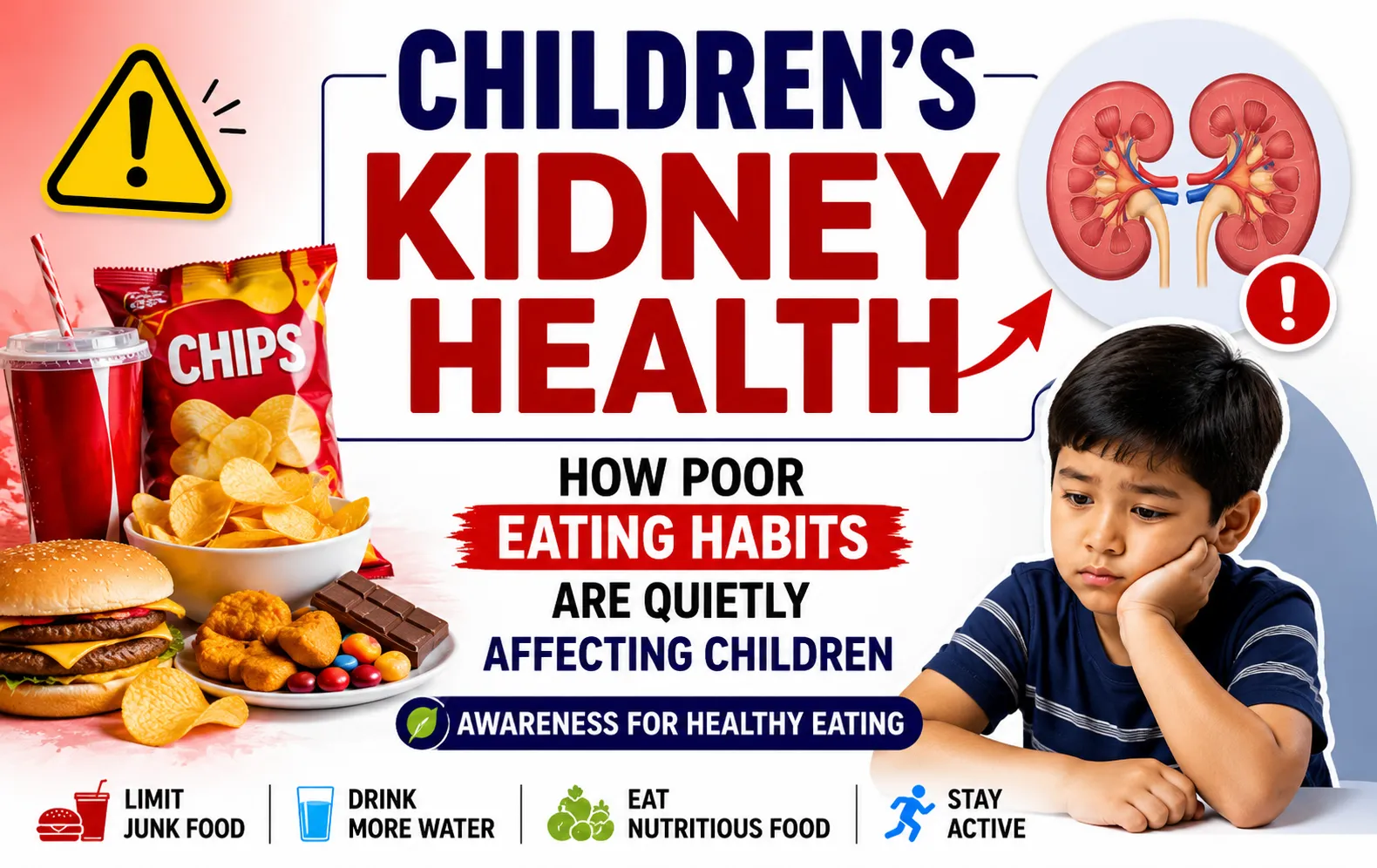
It is understandable. Packaged snacks, instant noodles, sugary drinks, screen-based entertainment, and irregular routines have become a normal part of modern childhood.
But normal does not always mean healthy.
Children's kidneys are developing organs with important roles in maintaining fluid and electrolyte balance, removing metabolic waste, regulating blood pressure, and supporting overall physiological health. At the same time, childhood is a critical period for establishing dietary, physical-activity, and hydration habits that may influence health later in life.
The good news is that protecting kidney and metabolic health does not require a complicated routine.
It starts with simple foundations: balanced food, adequate hydration, regular movement, healthy body weight, good sleep, and timely medical attention when symptoms appear.
Ayurveda offers an additional traditional framework through concepts such as Ahara, Vihara, Agni, Mutravaha Srotas, and Ojas. Modern pediatric medicine, meanwhile, provides standardized methods for assessing kidney function, blood pressure, nutrition, growth, and disease.
Understanding both perspectives can help parents make more informed choices—without replacing evidence-based pediatric care.
Why Kidney Health Matters During Childhood
The kidneys perform several essential functions.
They:
-
Filter waste products from the blood
-
Help maintain fluid and electrolyte balance
-
Contribute to blood-pressure regulation
-
Help maintain acid-base balance
-
Produce erythropoietin, a hormone involved in red blood-cell production
-
Participate in vitamin D metabolism and therefore contribute indirectly to healthy bones
Children's kidneys are particularly important because the body is continuously growing and changing during childhood.
Kidney health should therefore be viewed as part of overall child health, rather than as an isolated concern.
It is also important to understand that healthy children do not generally develop kidney disease simply because they occasionally eat chips, biscuits, or other packaged foods.
The concern is the long-term pattern.
A diet consistently high in sodium, added sugars, and energy-dense processed foods—combined with insufficient physical activity—can contribute to obesity, elevated blood pressure, and metabolic problems. These conditions can, in turn, increase the risk of kidney problems over the long term.
The Ayurvedic Perspective: Mutravaha Srotas, Agni and Ahara
Ayurveda approaches health through a different conceptual framework from modern nephrology.
Rather than describing kidney function through measures such as estimated glomerular filtration rate (eGFR), serum creatinine, or urine albumin, classical Ayurveda discusses urinary physiology within the broader concept of Mutravaha Srotas.
What Is Mutravaha Srotas?
In Ayurvedic literature, Mutravaha Srotas refers to the channels associated with the formation and transportation of urine.
This is an Ayurvedic physiological concept and should not be considered a direct anatomical equivalent of the modern kidneys and urinary tract.
The distinction is important because Ayurveda and modern medicine organize knowledge about the body using different frameworks.
Agni and Ama: The Ayurvedic Understanding
Ayurveda places considerable emphasis on Agni, traditionally described as the principle responsible for digestion and transformation.
Children are often described as having developing and changing digestive capacity. Their dietary patterns, appetite, age, activity level, and overall constitution are therefore important considerations in Ayurvedic dietary thinking.
When digestion is considered impaired, Ayurveda uses the concept of Ama to describe incompletely processed or improperly metabolized material.
However, Ama is an Ayurvedic theoretical concept. It should not be described as a scientifically established toxin that physically clogs the kidneys or urinary channels.
This distinction allows us to respect traditional Ayurvedic terminology while maintaining scientific accuracy.
Kapha, Kleda and Fluid Balance
Ayurvedic descriptions of metabolic and urinary disorders frequently discuss Kapha and Kleda, along with other doshic and tissue factors.
A diet dominated by very heavy, sweet, and excessively rich foods is traditionally considered capable of aggravating Kapha and disturbing metabolic balance.
From a modern nutritional perspective, frequent consumption of energy-dense foods can contribute to excess calorie intake and unhealthy weight gain when overall energy intake exceeds requirements.
These are different explanatory models, but both encourage an important practical principle:
The child's everyday food pattern matters more than an occasional treat.
Modern Pediatric Science: Everyday Habits That Deserve Attention
Several common lifestyle patterns deserve particular attention when discussing children's long-term metabolic and kidney health.
1. Excessive Sodium from Packaged Foods
Chips, instant noodles, processed snacks, sauces, and other packaged foods can contain substantial amounts of sodium.
Regularly consuming too much sodium can contribute to higher blood pressure. Since high blood pressure is an important risk factor for kidney disease, maintaining healthy sodium intake is relevant to long-term kidney health.
Parents do not need to eliminate every packaged food.
Instead, make fresh, minimally processed foods the everyday default.
2. Sugary Drinks and Sweetened Beverages
Soft drinks, sweetened fruit drinks, energy drinks, and other sugary beverages can add substantial amounts of free or added sugar to a child's diet.
Regular intake may contribute to excess calorie consumption and unhealthy weight gain.
Whole fruit is generally nutritionally different from fruit-flavoured or sugar-sweetened beverages because whole fruit provides fibre and requires chewing.
For everyday hydration, plain water should remain the primary beverage for most children.
3. Not Drinking Enough Water
Children may become so involved in school, games, television, or mobile devices that they simply forget to drink.
Insufficient fluid intake can lead to concentrated urine. In susceptible children, low fluid intake may contribute to an increased risk of urinary stone formation.
However, hydration requirements vary according to:
-
Age
-
Body size
-
Weather
-
Physical activity
-
Illness
-
Diet
There is no single water target that applies equally to every child.
Parents should encourage regular drinking rather than forcing excessive amounts of water.
4. Too Much Screen Time and Too Little Movement
The concern with excessive screen time is not that a mobile phone directly damages the kidneys.
The larger issue is what prolonged sedentary behaviour replaces:
-
Outdoor play
-
Walking
-
Sports
-
Sleep
-
Family interaction
-
Physical activity
Regular movement helps children maintain healthy body composition, cardiovascular fitness, and metabolic health.
For school-aged children and adolescents, health authorities generally recommend substantial daily physical activity, with approximately 60 minutes of moderate-to-vigorous activity per day being a commonly used benchmark.
The activity can come from sports, cycling, running, swimming, dancing, active games, or simply energetic outdoor play.
A Simple Kidney-Friendly Daily Routine for Children
Healthy kidney habits do not need to be complicated.
Think of them as a daily foundation rather than a treatment plan.
Morning
Start the day with a normal breakfast rather than relying on packaged snacks.
Examples include:
-
Vegetable poha
-
Daliya
-
Idli
-
Upma
-
Paratha with vegetables and an appropriate protein source
-
Eggs, where suitable
-
Milk or curd, where tolerated and appropriate
The goal is balanced nutrition rather than one "perfect" breakfast.
School and Midday
Packaged snacks can gradually become a child's default food if they are always easily available.
Instead, consider:
-
Fresh fruit
-
Roasted chana
-
Homemade sandwiches
-
Nuts, where age-appropriate and safe
-
Homemade snacks
-
Curd
-
Vegetable preparations
For younger children, avoid foods that present a choking hazard and follow age-appropriate feeding recommendations.
Make Water the Default Beverage
Keep a reusable water bottle accessible.
Instead of making children dependent on sweetened drinks, gradually develop the habit of choosing water when thirsty.
During hot weather or periods of intense physical activity, fluid requirements may increase.
If a child has a kidney, heart, or other medical condition for which fluid intake has been restricted by a doctor, do not increase fluids without medical advice.
Build Meals Around Real Food
A simple plate can include:
Carbohydrate + Protein + Vegetables/Fruit + Appropriate Fat
For example:
-
Roti + dal + sabzi + curd
-
Rice + rajma + vegetables
-
Khichdi + curd + vegetables
-
Daliya + vegetables + a protein source
-
Idli + sambar + vegetables
There is no requirement to completely eliminate rice, roti, potatoes, or other traditional foods from a healthy child's diet.
Portion, variety, preparation, and overall dietary pattern matter.
Traditional Indian Foods: A Practical Ayurvedic Connection
Many foods commonly used in Indian households can fit comfortably into a balanced diet.
Examples include:
-
Lauki
-
Tori
-
Cucumber
-
Seasonal fruits
-
Moong dal
-
Chana
-
Whole grains
-
Fresh vegetables
-
Homemade buttermilk or curd, where appropriate
Ayurveda traditionally considers many foods according to qualities such as guru (heavy), laghu (light), ushna (warming), and shita (cooling).
Modern nutrition evaluates foods using a different framework—including calories, fibre, protein, carbohydrates, fats, micronutrients
Frequently Asked Questions