
Does Premature Ejaculation Cause Infertility? Science, Ayurvedic Insights, and Fertility Solutions

Key Takeaways
-
No Direct Biological Link: Premature Ejaculation (PE) affects the timing of ejaculation, not sperm count, motility, or genetic quality.
-
Indirect Conceiving Obstacles: PE can hinder fertility primarily if ejaculation occurs prior to vaginal penetration or if severe performance anxiety reduces intercourse frequency during the fertile window.
-
Ayurvedic Mechanics: In Ayurveda, PE is understood as an aggravation of Vata Dosha (specifically Vyana and Apan Vayu) disrupting Shukra Dhatu (reproductive tissue integrity).
-
High Reversibility: Both ejaculatory latency and sperm parameters can be optimized using targeted behavioral conditioning, classical Ayurvedic herbal formulations, and lifestyle recalibration.
Introduction
Sexual health issues often carry heavy emotional weight, frequently worsened by silence, cultural stigma, and pervasive online misinformation. Among men experiencing performance concerns, one question arises repeatedly: Does premature ejaculation directly cause male infertility?
When couples face delays in conceiving, every aspect of sexual performance comes under intense scrutiny. Performance anxiety can quickly blend with worries about reproductive capacity, leading many to believe that ejaculating too quickly lowers sperm quality or damages reproductive function.
Written from an integrative health perspective combining clinical reproductive physiology and classical Ayurvedic science, this comprehensive guide clarifies the exact boundaries between ejaculatory latency and biological fertility. You will learn the medical realities of sperm health, the Ayurvedic framework governing ejaculatory control (Shukra Dhatu), and practical steps to optimize both performance and conception success.
Ejaculatory Performance vs. Reproductive Physiology
Can Premature Ejaculation Directly Cause Infertility?
Direct Answer: No, premature ejaculation does not directly cause infertility. PE is a neuro-ejaculatory latency issue, not a disorder of spermatogenesis. Men with PE typically possess normal sperm counts, healthy sperm motility, and intact hormonal profiles, meaning their intrinsic biological capacity to fertilize an egg remains fully functional.
To evaluate male reproductive health accurately, it is essential to distinguish between the physical timing of ejaculation and the biological quality of the ejaculate itself.

Ejaculatory Latency vs. Spermatogenesis
Premature ejaculation is clinically characterized by ejaculation occurring within approximately one minute of vaginal penetration (primary PE) or a significant, distressing reduction in latency time (acquired PE), accompanied by an inability to delay ejaculation. This mechanism is primarily governed by central neuro-chemical signaling—specifically central serotonergic pathways—and autonomic nervous system tone.
Spermatogenesis (the creation of sperm cells), on the other hand, occurs entirely within the seminiferous tubules of the testes under the regulation of the Hypothalamic-Pituitary-Gonadal (HPG) axis (involving Follicle-Stimulating Hormone, Luteinizing Hormone, and Testosterone). Because the physiological machinery that creates healthy sperm operates independently of the spinal reflex arcs controlling ejaculatory timing, premature ejaculation leaves sperm production and quality completely unaffected.
When Ejaculation Latency Indirectly Impacts Conception
While premature ejaculation does not alter sperm biology, specific behavioral and mechanical challenges associated with severe PE can create real obstacles during the conceiving process.

1. Ante-Portam Ejaculation (Ejaculation Prior to Penetration)
The most direct physical obstacle occurs in severe cases where ejaculation occurs outside the vaginal canal prior to intromission (ante-portam ejaculation). Because sperm cells must be deposited near the uterine cervix to navigate the female reproductive tract, intravaginal deposition is necessary for natural conception.
2. Performance Anxiety and Avoidance Behavior
Repeated experiences of premature ejaculation frequently generate severe anticipatory anxiety. Over time, men may begin avoiding sexual intimacy altogether out of frustration or shame. This reduction in intercourse frequency—especially during the female partner's critical 6-day fertile window—dramatically lowers the mathematical probability of conception occurring in any given cycle.
3. Stress-Induced Hormonal Shifts
Chronic performance stress raises systemic cortisol and adrenaline levels. Prolonged activation of the sympathetic nervous system can suppress libido, impair erectile firmness (leading to co-existing erectile dysfunction or Pramaha), and disrupt natural intercourse rhythms.
4. Shared Underlying Medical Factors
In some clinical instances, acquired PE serves as a secondary symptom of an underlying medical condition that independently impacts fertility. Conditions such as chronic pelvic pain syndrome, bacterial prostatitis, systemic thyroid dysfunction, or hypogonadism can disrupt ejaculatory control while simultaneously altering seminal plasma composition or testicular function.
The Ayurvedic Perspective: Vata Imbalance and Shukra Dhatu
In classical Ayurveda, male sexual and reproductive health is governed by the science of Vajikarana (virility and reproductive medicine). Ejaculatory performance and sperm vitality are viewed through the lens of Dosha balance and the health of the seventh tissue layer, Shukra Dhatu (reproductive tissue).

The Role of Vata Dosha in Ejaculation
The movement, retention, and release of all bodily fluids—including Shukra—are mediated by Vata Dosha, specifically:
-
Vyana Vayu: Governs neurological signaling, sensation, and circulation throughout the body.
-
Apan Vayu: Governs downward expulsion processes located in the pelvic floor, urinary tract, and reproductive organs.
When psychological stress, excess physical exertion, irregular sleep, or erratic dietary habits overload the nervous system, Vata becomes severely hyperactive (Vata Prakopa). Excess, unsteady Vata destabilizes the pelvic region, causing Kshipra Munchana (uncontrolled, rapid release of semen) before Shukra Dhatu can be stably retained.
Distinguishing Ejaculatory Control (Shukra Vega) from Sperm Vitality (Shukra Sampat)
Ayurveda clearly distinguishes between ejaculatory speed and the quality of the reproductive fluid:
-
Speed/Latency (Shukra Vegadharana): Controlled by mental stability (Sattva) and balanced Vata. Weakness here causes early release without necessarily degrading the fluid itself.
-
Sperm/Fluid Quality (Shukra Sampat): Dependent on proper digestion (Agni) and sequential nourishment across all seven Dhatus (from Rasa to Shukra). Impairment here results in Ksheena Shukra (low sperm count) or Dushta Shukra (poor quality sperm).
Therefore, an individual may experience Vata-driven rapid ejaculation while maintaining completely healthy, fertile Shukra Dhatu.
Comparative Matrix: Sexual Performance vs. Reproductive Parameters
Understanding the distinct differences between performance metrics and fertility indicators helps target appropriate solutions.
| Feature / Metric | Premature Ejaculation (PE) | Biological Male Infertility | Combined / Overlapping Scenario |
| Primary Mechanism | Altered central serotonin sensitivity, hyperactive pelvic reflexes, anxiety | Defective spermatogenesis, ductal blockage, hormonal disruption | Chronic prostatitis or severe endocrine dysfunction |
| Impact on Sperm Count | None (Normal concentration: $\ge 15$ million/mL) | Low or absent (Oligozoospermia / Azoospermia) | Depends on underlying pathology |
| Impact on Sperm Motility | None (Normal progressive motility: $\ge 32\%$) | Impaired progressive motility (Asthenozoospermia) | Generally normal unless infection is present |
| Conception Barrier | Mechanical/Timing (Inability to deposit sperm intravaginally) | Cellular/Biochemical (Inability of sperm to reach or fertilize egg) | Dual barrier: timing failure + cellular deficiency |
| Ayurvedic Diagnostic Category | Vata-Dominant Shukragata Vata / Kshipra Munchana | Ksheena Shukra (Depleted Tissue) / Dushta Shukra | Vata-Pitta Dushti with Ksheena Shukra |
| Primary Clinical Focus | Neuro-behavioral conditioning, nervous system calming | Testicular support, hormonal balancing, lifestyle detox | Comprehensive mind-body-reproductive protocol |
Integrative Solutions for Ejaculatory Control and Fertility Enhancement
Restoring calm ejaculatory control while optimizing reproductive health requires a combined approach incorporating behavioral techniques, nerve-toning herbs, and lifestyle changes.

1. Classical Ayurvedic Herbal Interventions
-
Ashwagandha (Withania somnifera): A renowned adaptogen that modulates the HPA axis, lowers stress-induced cortisol, tones the nervous system, and calms hyperactive Vata in the pelvic region.
-
Kapikacchu (Mucuna pruriens): Rich in natural L-DOPA, this herb supports healthy dopamine production, enhancing ejaculatory control, mood, and baseline sperm quality.
-
Gokshura (Tribulus terrestris): Acts as a gentle tonic (Vrishya) for the urogenital tract, strengthening pelvic tissue, supporting endogenous testosterone levels, and improving overall stamina.
-
Shatavari (Asparagus racemosus): Nourishes Shukra Dhatu, provides cooling energy to balance excessive internal heat (Pitta), and enhances fluid quality.
-
Brahmi (Bacopa monnieri) & Shankhpushpi (Convolvulus pluricaulis): Powerful Medhya Rasayanas (brain tonics) that reduce performance-related anxiety, calm racing thoughts, and support central nervous system stability.
2. Behavioral Strategies & Physical Training
-
The Start-Stop Technique: Practiced individually or with a partner, this exercise involves bringing stimulation close to the point of ejaculatory inevitability, stopping all movement until arousal subsides, and then resuming. This reconditions central nervous system response thresholds over time.
-
The Squeeze Technique: Similar to start-stop, pressure is applied gently to the frenulum or base of the glans when reaching high arousal to reduce the ejaculatory urge before resuming intimacy.
-
Pelvic Floor Exercises (Kegels): Strengthening the Pubococcygeus (PC) muscle through controlled contractions empowers men to voluntary inhibit the ejaculatory reflex arc during intimacy.
3. Lifestyle Modifications
-
Optimize Sleep Architecture: Prioritize 7–9 hours of deep sleep to allow proper neuro-chemical restoration and testosterone production.
-
Eliminate Smoking and Excess Alcohol: Nicotine restricts micro-vascular pelvic circulation and accelerates sperm DNA fragmentation, while excessive alcohol degrades both ejaculatory latency and sperm motility.
-
Mindful Ovulation Timing: Utilizing ovulation predictor kits (OPKs) helps eliminate guesswork, reducing the pressure to engage in frequent intercourse outside the fertile window.
Standard Dosages, Administration & Precautions
When incorporating Ayurvedic herbs or nutritional supplements into your routine, adherence to proper dosages and safety guidelines ensures optimal outcomes.
| Herbal Formulation | Typical Standardized Dosage | Primary Therapeutic Objective | Safety Notes & Precautions |
| Ashwagandha Root Extract | 300 mg – 600 mg twice daily with warm milk/water | Calms nervous system, lowers cortisol, tones Vata | Use with caution in hyperthyroidism; may increase thyroid hormone levels |
| Kapikacchu Seed Powder/Extract | 250 mg – 500 mg daily after meals | Boosts L-DOPA, enhances neurotransmitter regulation | Avoid high doses if taking pharmaceutical MAO-inhibitors or anti-psychotics |
| Gokshura Extract | 500 mg twice daily | Supports urogenital tone, enhances overall stamina | Monitor blood sugar if taking anti-diabetic medications |
| Shilajit (Purified Resin) | 250 mg – 500 mg daily with warm milk | Enhances cellular energy (ATP), improves Shukra Dhatu quality | Ensure resin is fully purified; avoid raw unrefined forms |
When to Consult a Medical Specialist
While performance anxiety and mild Vata imbalances respond well to conservative therapies, medical evaluation is recommended under specific clinical circumstances.
Seek Immediate Professional Medical Evaluation If You Experience:
-
Conception Delays: Inability to achieve pregnancy after 12 months of regular, unprotected intercourse (or 6 months if the female partner is over 35).
-
Ante-Portam Ejaculation: Inability to achieve vaginal penetration due to premature release.
-
Co-Existing Pain: Pain, burning, or discomfort in the testicles, perineum, prostate area, or during ejaculation.
-
Sperm Abnormalities: Visible blood in the ejaculate (Hematospermia), unusually clear/watery fluid, or drastic drops in ejaculate volume.
-
Erectile Dysfunction: Inability to achieve or maintain an erection suitable for intercourse.
Frequently Asked Questions (FAQs)
1. Does frequent premature ejaculation reduce a man's sperm count?
No. Ejaculatory frequency and speed do not deplete testicular sperm production capacity. The testes continuously generate millions of fresh sperm daily regardless of how rapidly ejaculation occurs during intercourse.
2. Can masturbation cause premature ejaculation or infertility?
No. Masturbation is a normal physiological activity and does not cause physical damage to the reproductive organs, permanent nerve damage, or male infertility. However, habitually rushing masturbation to finish quickly can create conditioned neural reflexes that contribute to acquired PE during partner intimacy.
3. How does a doctor test if premature ejaculation is affecting fertility?
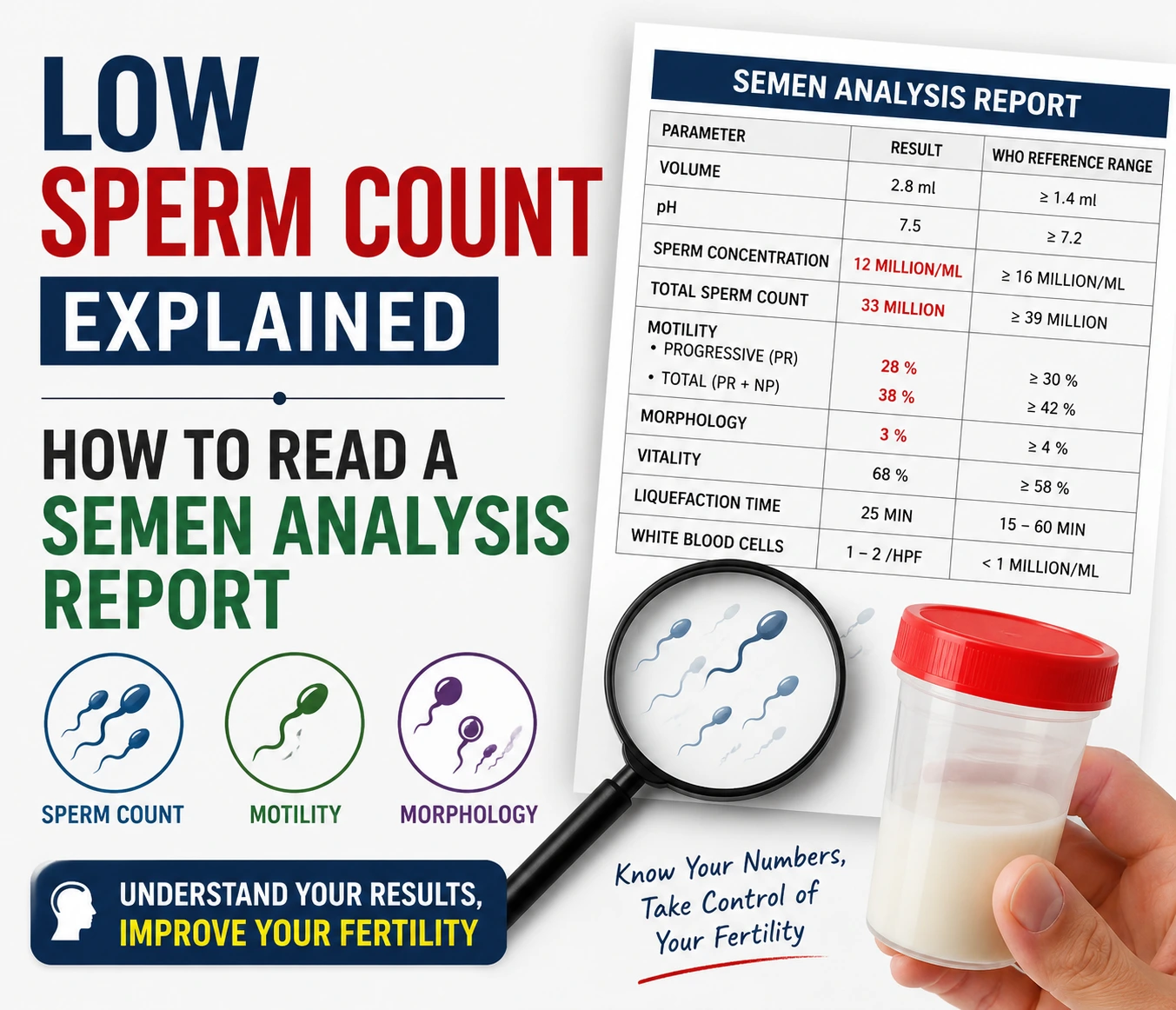
A doctor will perform two separate evaluations: a detailed clinical history to assess ejaculatory timing and psychological factors, and a formal Semen Analysis. The semen analysis checks sperm count, motility, morphology, and volume to evaluate biological fertility independently of ejaculatory control.
4. Can a couple conceive naturally if the man has premature ejaculation?
Yes, absolutely. As long as ejaculation occurs inside the vaginal canal near the cervix during the female partner's fertile window, sperm can swim through the reproductive tract to fertilize the egg, regardless of how quickly ejaculation occurred.
5. Are there assisted reproductive options if PE prevents natural conception?
Yes. If ante-portam ejaculation or severe anxiety prevents intercourse, non-invasive procedures such as Intrauterine Insemination (IUI) can be used. Sperm is collected, processed in a laboratory to select the healthiest cells, and placed directly into the female uterus during ovulation.
Medical Disclaimer
This article is for educational, informational, and content purposes only and does not constitute formal medical advice, diagnosis, or clinical treatment. The Ayurvedic concepts and herbal suggestions mentioned have not been evaluated by pharmaceutical regulatory bodies as standalone cures for medical infertility. Always consult a qualified urologist, reproductive endocrinologist, or registered Ayurvedic physician before initiating any new supplement, herbal formula, or therapeutic protocol.
Verified References & Further Reading
-
Althof, S. E., et al. (2014). An update of the International Society for Sexual Medicine's guidelines for the diagnosis and treatment of premature ejaculation (PE). The Journal of Sexual Medicine, 11(6), 1392-1422.
-
McMahon, C. G. (2011). Premature ejaculation: advances in recent years. Trends in Urology & Men's Health, 2(6), 18-23.
-
Sharma, R. K., & Dash, B. (2003). Charaka Samhita: Text with English Translation (Vajikarana Adhyaya - Chapter on Aphrodisiacs). Chowkhamba Sanskrit Series Office, Varanasi, India.
-
Sikka, S. C., & Hellstrom, W. J. (2016). Bioenvironmental Issues Affecting Male Reproductive and Sexual Health. Academic Press.
-
Chauhan, N. S., et al. (2014). A review on plants with aphrodisiac property. BioMed Research International, Vol. 2014, Article ID 868505.
Frequently Asked Questions
Related Articles