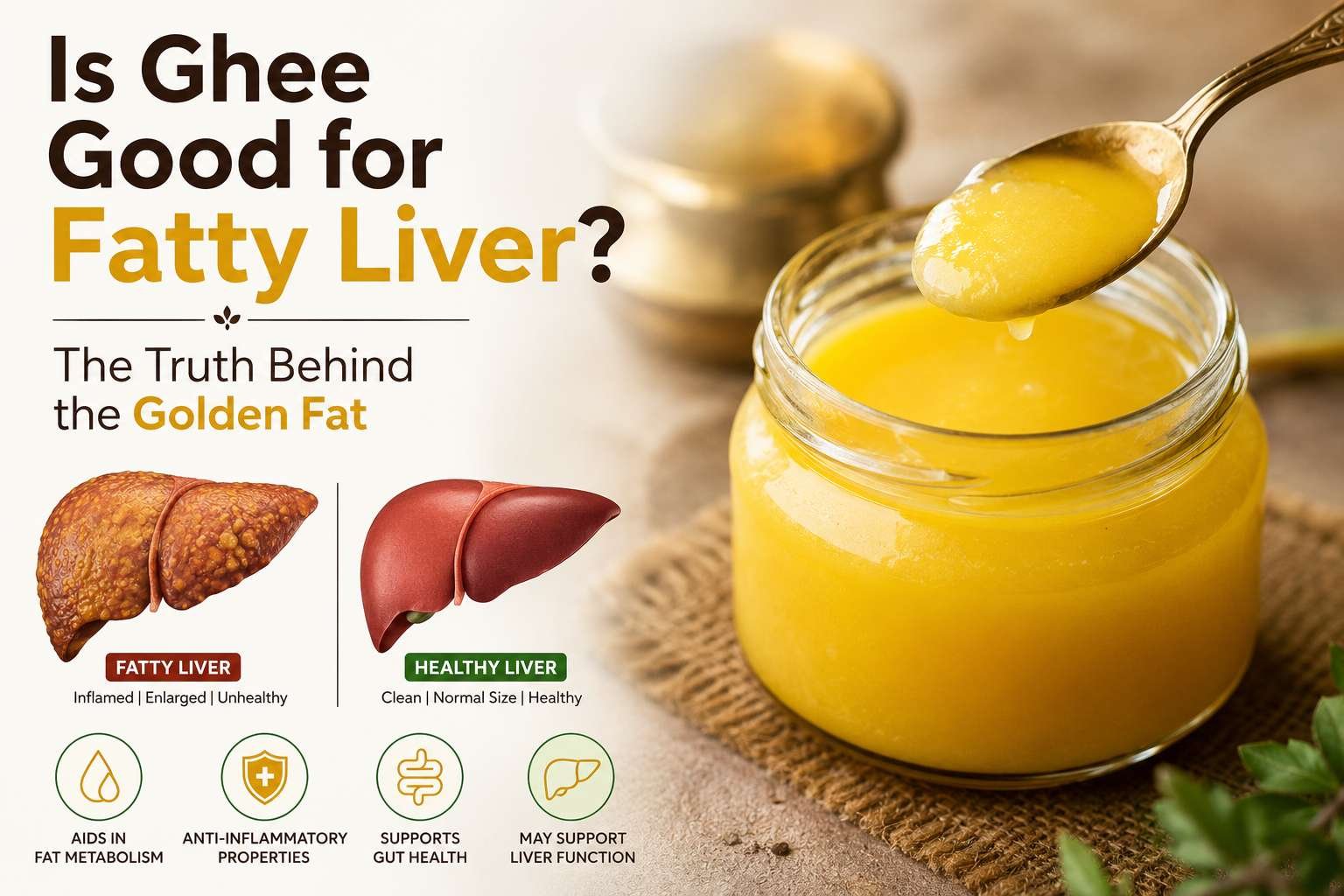
Is Ghee Good for Fatty Liver? Clinical Realities and Ayurvedic Wisdom
In my practice as an educator and wellness consultant, I frequently meet individuals who receive an unexpected diagnosis during routine health check-ups: hepatic steatosis, commonly known as fatty liver. Often completely silent in its early stages, fatty liver occurs when excess fat droplets accumulate inside hepatocytes (liver cells) [NIH, 2023]. With modern lifestyles characterized by sedentary routines, high stress, and processed diets rich in refined sugars and trans fats, this metabolic condition has reached epidemic proportions globally.
When clients sit in front of me with their ultrasound reports, one of their most frequent questions is: "Can I still consume traditional cooking fats like ghee, or is it adding fuel to the fire?" Because traditional diets heavily feature clarified butter, this is a vital question to explore. Let us examine what modern clinical science and classical Ayurvedic wisdom say about incorporating ghee into a liver-supportive lifestyle.
Understanding Fatty Liver: Modern and Ayurvedic Lenses
From a modern clinical standpoint, non-alcoholic fatty liver disease (NAFLD) is deeply intertwined with metabolic dysfunction and insulin resistance. When cells stop responding effectively to insulin, free fatty acids flood the bloodstream and accumulate within the liver. Over time, oxidative stress and chronic low-grade inflammation can escalate simple steatosis into non-alcoholic steatohepatitis (NASH), fibrosis, or cirrhosis [NIH, 2023].
Viewing this through the classical lens of Ayurveda, the liver is revered as the primary seat of Ranjaka Pitta and the foundational site where Rasa and Rakta Dhatus (nutritive and blood tissues) are processed and refined. When our daily lifestyle (Vihara) and diet (Ahara) go out of balance—such as consuming heavy, oily, or incompatible foods while lacking adequate physical activity—our metabolic digestive fire (Agni) falters at the tissue level (Dhatvagni Mandya). According to the Charaka Samhita, this disruption causes the formation of Ama (metabolic toxins) and the vitiation of Kapha and Pitta doshas, which clog the subtle channels (Srotas) of the liver and manifest as sluggish metabolism, heaviness, and chronic fatigue [Charaka Samhita, Chikitsa Sthana, Chapter 15].
Medical Disclaimer: This article is for educational and informational purposes only and should not be construed as professional medical advice, diagnosis, or treatment. Always consult a qualified healthcare provider or Ayurvedic practitioner before making significant changes to your diet or health regimen.
Ghee: A Nutritional and Classical Overview
Ghee (clarified butter) is far more than a simple culinary fat; it is a nutrient-dense food packed with:
-
Short-Chain Fatty Acids: Notably butyrate, which supports gut lining integrity and metabolic health.
-
Fat-Soluble Vitamins: Rich in vitamins A, D, E, and K, which are essential for cellular repair and immune regulation.
-
Oxidative Stability: Unlike processed seed oils, ghee maintains its chemical stability when exposed to heat, preventing the formation of harmful lipid peroxides.
The Gut-Liver Connection
Modern medical research has highlighted the gut-liver axis as a major player in metabolic health. When the gut microbiome is disrupted (dysbiosis), harmful bacterial byproducts cross the intestinal barrier, triggering systemic inflammation that directly burdens the liver. As a nourishing food component, moderate ghee consumption supports gut mucosal integrity and fosters a healthier gut-liver connection [PubMed, 2021].
How Ghee May Support Liver Wellness
While ghee is calorie-dense and must be used judiciously, integrating it thoughtfully can provide several supportive benefits:
1. Providing Butyrate for Reduced Inflammation
One of ghee’s notable components is butyrate, a short-chain fatty acid known to reduce inflammation in the gastrointestinal tract. Emerging studies suggest that butyrate may improve insulin sensitivity and support systemic metabolic health—all of which are beneficial in managing fatty liver [BMC Gastroenterology, 2021].
2. Superior to Industrial Seed Oils
When compared to highly refined industrial seed oils (like corn or soybean oil), natural ghee is less prone to oxidative damage and excessive omega-6 fatty acid imbalances. Seed oils high in omega-6 can promote pro-inflammatory pathways when consumed in excess. Ghee, when used wisely as part of a whole-food diet, avoids these industrial trans-fat risks.
3. Enhancing Nutrient Absorption as an Anupana
In Ayurveda, ghee is classified as a premier Yogavahi—a substance that enhances the therapeutic properties and absorption of whatever it is paired with. In fatty liver conditions, fat metabolism is already impaired. Using ghee as a carrier medium helps the body absorb vital fat-soluble vitamins (A, D, E, K) necessary for cellular repair, without relying on synthetic supplements.
4. Balancing Agni and Vata
According to classical texts like the Ashtanga Hridaya, pure cow's ghee (Grita) is known to nourish Agni (digestive fire) without excessively aggravating Pitta when consumed in appropriate quantities. It pacifies Vata and helps lubricate the internal channels (Srotas), assisting in the smooth downward flow of metabolic wastes (Apana Vata) [Ashtanga Hridaya, Sutra Sthana, Chapter 5].
Navigating the Saturated Fat Dilemma
The primary concern regarding ghee and fatty liver lies in its saturated fat content, as excess saturated fat can contribute to lipid accumulation. However, clinical nuances matter:
-
Not all saturated fats behave identically; the unique short- and medium-chain fatty acid profile of grass-fed ghee is metabolized more efficiently than long-chain saturated fats found in processed meats.
-
Moderation is non-negotiable. Consuming 1 to 2 teaspoons per day within a balanced, high-fiber diet is generally well-tolerated, whereas pouring excessive amounts over heavy, refined-carb meals will promote weight gain and worsen hepatic steatosis.
Practical Guidelines: How to Use Ghee Wisely
If you are managing fatty liver, keep these practical tips in mind:
-
Portion Control: Stick to 1–2 teaspoons per day total across your meals.
-
Mindful Pairing: Use ghee to lightly sauté vegetables, cook lentils (dal), or season traditional spices. Avoid combining ghee with excessive refined sugars or heavy refined carbohydrates.
-
Quality Matters: Choose authentic, grass-fed organic cow’s ghee to ensure maximum purity and nutrient density.
-
Avoid Deep Frying: Never use ghee for heavy deep-frying, which degrades the fat and creates heavy Ama (toxins) that burden the liver.
When to Exercise Caution or Avoid Ghee
Despite its benefits, ghee requires careful moderation or restriction under certain conditions:
-
Advanced Liver Disease: If you have severe fibrosis, cirrhosis, or acute metabolic complications, consult your hepatologist or clinical nutritionist before incorporating rich fats.
-
Dyslipidemia: Individuals struggling with significantly elevated LDL cholesterol or triglycerides should closely monitor their total saturated fat intake and maintain regular lipid profile checks.
Comprehensive Lifestyle Support for Liver Health
Relying on a single dietary adjustment will not reverse a sluggish liver. Lasting recovery requires a holistic lifestyle framework:
-
Whole Food Nutrition: Prioritize high-fiber green leafy vegetables, bitter gourds, and lean proteins while eliminating refined flour, packaged snacks, and sugary beverages.
-
Consistent Movement: Incorporate daily physical activity—such as brisk walking, yoga, or swimming—to stimulate circulation and reduce visceral adiposity.
-
Circadian Alignment: Align your sleep-wake cycle with nature (Dinacharya), ensuring deep restorative rest so the liver can execute its nocturnal cellular repair cycle uninterrupted.
References & Further Reading:
-
Modern Medical References:
-
National Institutes of Health (NIH). (2023). Non-Alcoholic Fatty Liver Disease: Clinical Management and Pathogenesis. NIDDK Research Updates.
-
BMC Gastroenterology. (2021). Short-chain fatty acids and their association with non-alcoholic fatty liver disease. PMCID: PMC8129421.
-
-
Classical Ayurvedic Texts & Books:
-
Charaka Samhita, Chikitsa Sthana, Chapter 15 (Grahani Dosha Chikitsa) - Detailed analysis of Agni, Ama, and metabolic disorders.
-
Ashtanga Hridaya, Sutra Sthana, Chapter 5 (Dravya Dravaniya Adhyaya) - Classical properties of fats, oils, and cow's ghee (Grita).
-
FAQs:
Q1: Can I eat ghee daily if I have a fatty liver?
A1: Yes, in strict moderation (1–2 teaspoons per day), pure cow’s ghee can be part of a balanced diet that supports overall metabolism without overwhelming the liver.
Q2: Does ghee increase liver fat?
A2: Excessive intake of any calorie-dense fat—especially when combined with high sugar and refined carbs—can contribute to weight gain and liver fat buildup. However, moderate amounts of natural ghee do not inherently cause liver damage.
Q3: Is cow's ghee better than buffalo ghee for fatty liver?
A3: In Ayurvedic practice, cow's ghee (Go Ghrita) is generally preferred because it is lighter, easier to digest, and possesses properties that help pacify imbalances without creating excessive heaviness or Kapha.
Q4: How does ghee affect digestion (Agni)?
A4: Unlike heavy industrial oils that can suppress digestion, pure ghee stimulates tissue-level digestive fire (Dhatvagni) and enhances the bioavailability of vital nutrients when used correctly.
Q5: Should I consult a doctor before adding ghee to a therapeutic diet?
A5: Yes. If you are managing chronic metabolic conditions, severe insulin resistance, or advanced liver disease, consulting a qualified healthcare professional ensures your diet is tailored safely to your condition.